
Custom Color Matching
Precision Cerakote ceramic coatings for aerospace, defense, and industrial components.
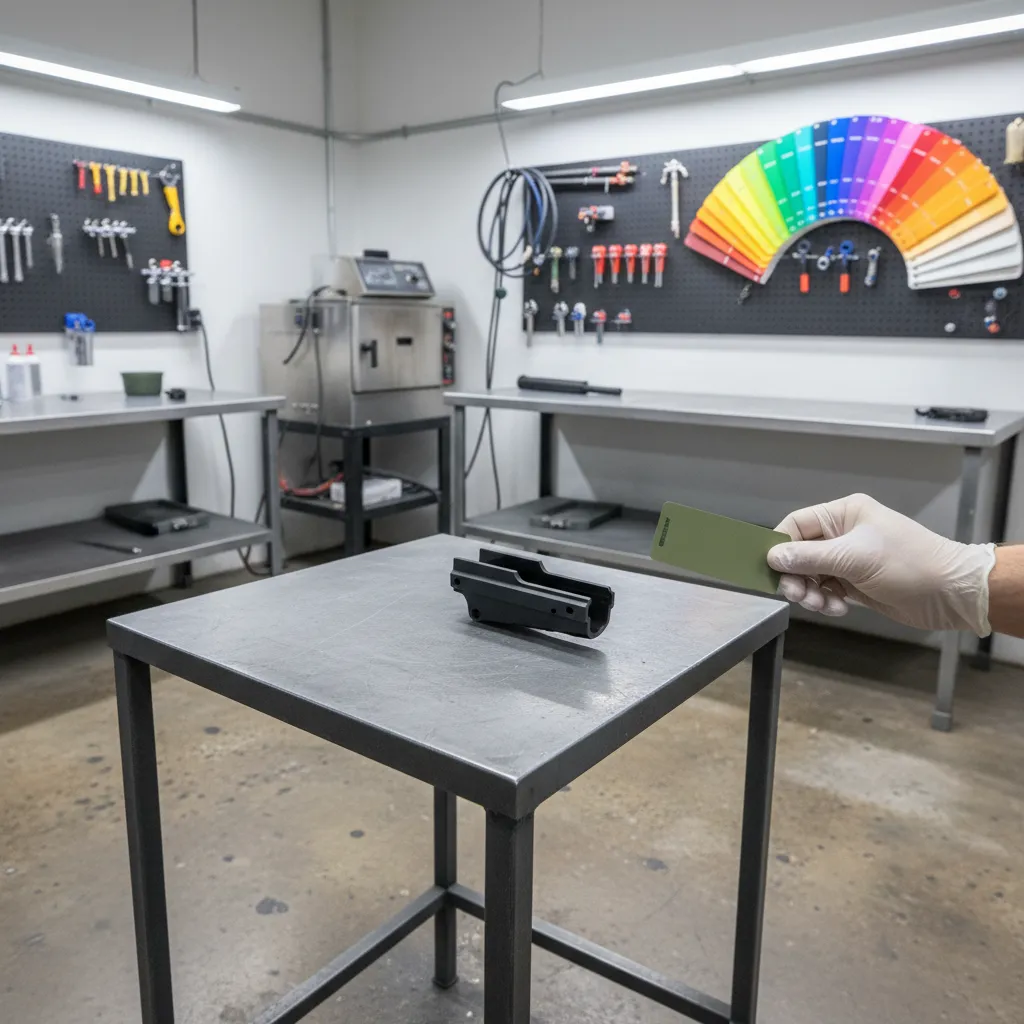
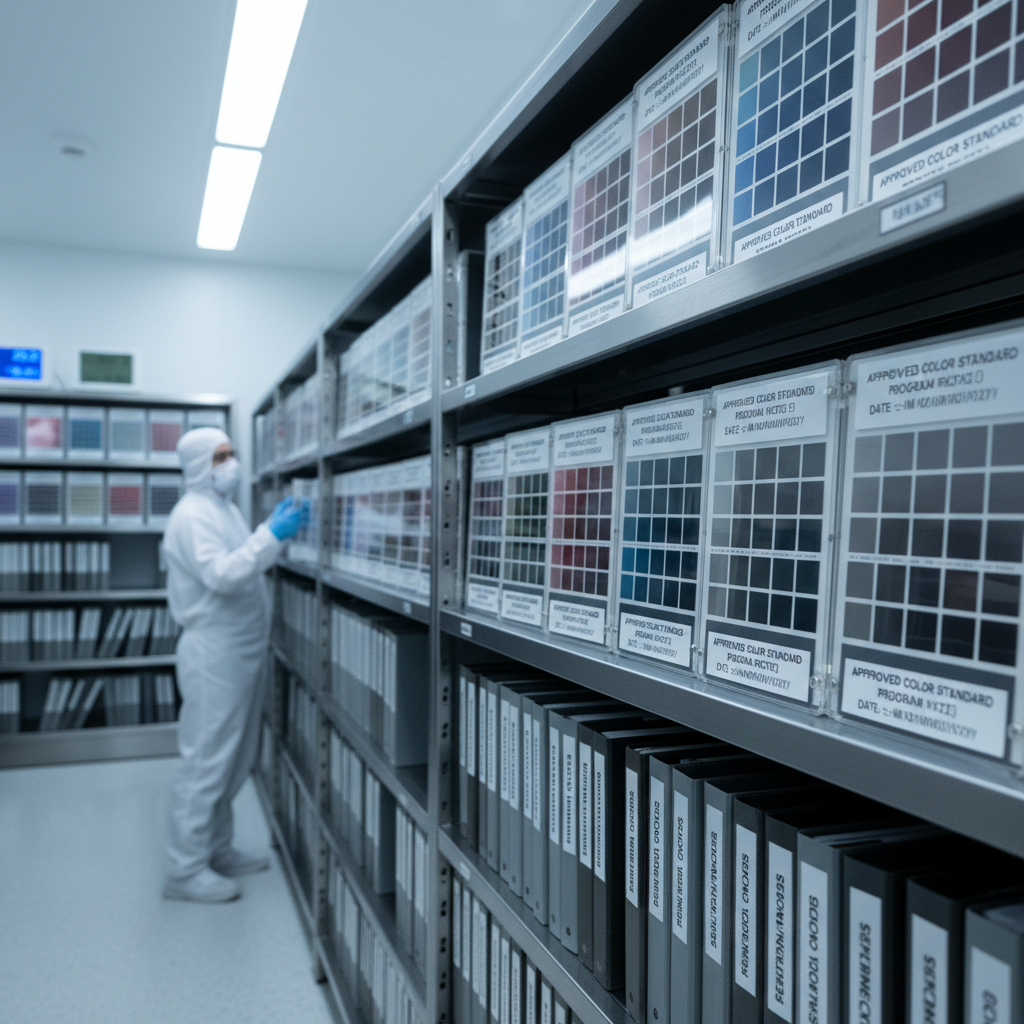

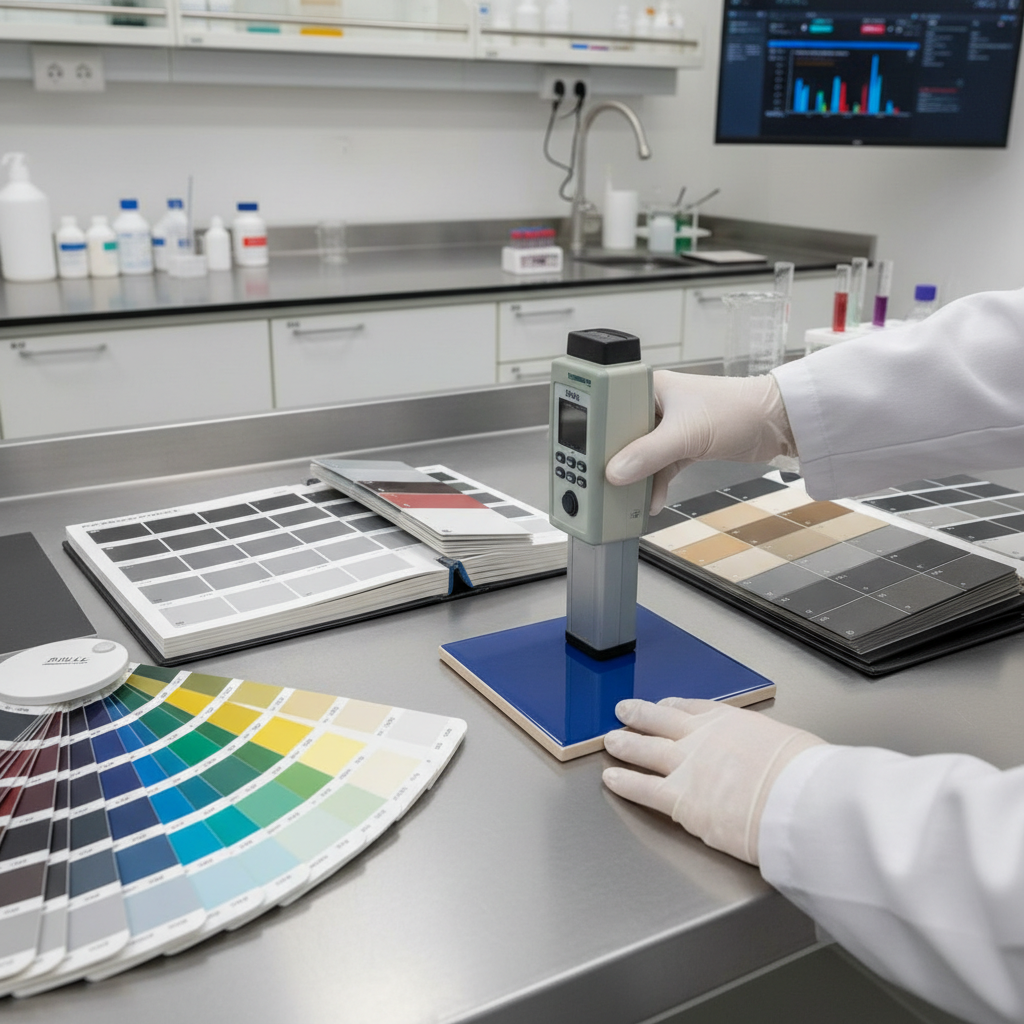
How Custom Color Matching Works at ColoradoKote
Spectrophotometer analysis measures your target color sample and identifies the closest match from over 200 standard Cerakote® formulations. When standard colors fall short, custom formulations are developed and verified to Delta E ≤1.5 tolerance. The matched formula is locked for your program duration, ensuring batch-to-batch consistency.
What Sets Us Apart
ColoradoKote uses spectrophotometer measurement, not visual comparison, to quantify color accuracy to Delta E ≤1.5. While Cerakote® does not offer direct Pantone matching, our process achieves close matches to corporate colors and program-specific requirements. Custom formulations are developed when standard catalog options do not meet specification, with formula lock ensuring consistency across multi-year production programs.
Aerospace Standards
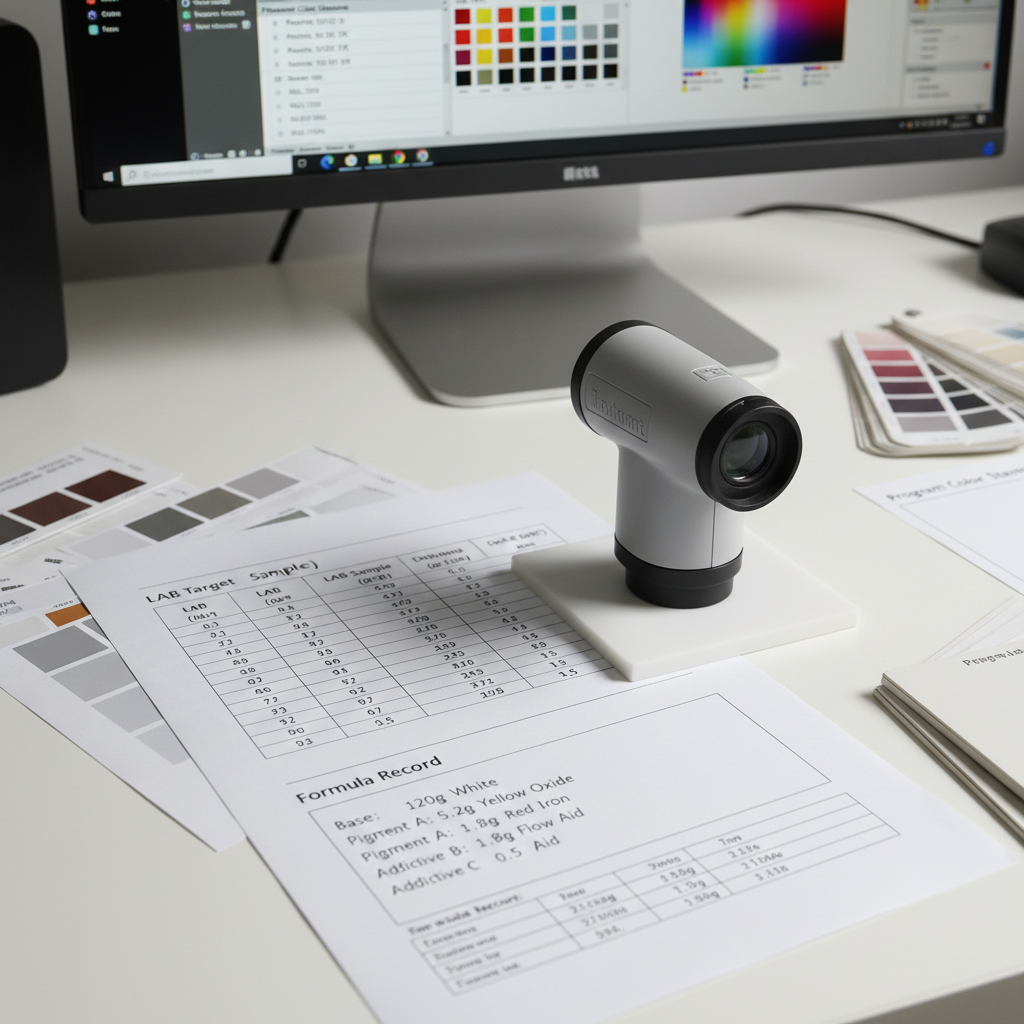
Color match verification data, including spectrophotometer readings, Delta E measurements, and formula identification, is recorded under AS9100 controls for every production run. Retained color samples provide physical reference standards alongside digital data. Your quality team receives objective color conformance documentation, not subjective visual approval.


What you gain from precision color matching
Color inconsistency costs aerospace programs $50K-$200K annually in rework and delays. Precision matching eliminates those losses.

Delta E ≤1.5 Spectrophotometer Verified
Instrumental measurement eliminates subjective visual matching. Delta E ≤1.5 means color variation is imperceptible to the human eye under normal viewing conditions. Every production batch is measured against the approved standard before parts ship, where powder coating typically delivers Delta E 2-4.
Formula Lock for Program Duration
Once your color is matched and approved, the formula is locked and documented. Whether you order 50 parts this month or 5,000 next year, the same formula, application parameters, and cure profile produce identical color output. No batch-to-batch drift across multi-year production programs.
200+ Standard Colors Plus Custom Development
The Cerakote® color catalog offers over 200 standard options in various finishes, from matte to high gloss. When your specification requires a color outside the standard range, custom formulations are developed with the same Delta E ≤1.5 verification standard. Standard, matte, and custom finishes all carry the same ceramic-polymer performance properties.
Color matching specifications that protect your production program
| Specification | Value | Test Method |
|---|---|---|
| Lot-to-Lot Color Consistency | Delta E 1.5 | Spectrophotometer |
| Color Measurement System | L*a*b* color space | X-Rite / Konica Minolta |
| UV Color Stability (2,000 hrs) | Delta E <2 | ASTM G154 QUV |
| Standard Color Library | 200+ Cerakote colors | Cerakote Catalog |
| Custom Color Development | 2-3 weeks to Delta E 1.5 | Iterative formula refinement |
| Multi-Year Stability | Delta E <1 over 5+ years | Archive sample comparison |
| Federal Standard 595 Matching | Delta E ≤2 | FS color chip comparison |
| Batch Validation Threshold | Delta E 1.5.0 required | Pre-production spectrophotometer |
| Visual Inspection Lighting | D65 standardized daylight | Lighting booth verification |
| Environmental Control | ±5 F temperature, ±10% humidity | Spray booth monitoring |
| Sample Retention | 10-year archive | Climate-controlled storage |
| Formulation Lock | Full program duration | Documented formula freeze |
Certifications: AS9100 | ISO 9001 | ITAR | Cerakote Advanced Applicator
Your color standard is measured and archived
You provide a physical sample part, RAL value, Federal Standard 595 chip, or digital specification. Note: ColoradoKote does not do direct Pantone-to-Cerakote® matching, but can achieve close matches using Cerakote's color system. Custom color creation through Cerakote is possible for exact requirements, though this is a specialized and higher-cost process. ColoradoKote measures the target color with a spectrophotometer, capturing L*a*b* values under D65 standardized lighting. The master standard is photographed, documented, and stored in a climate-controlled archive for the full program duration. All records link to your purchase order, part number, and coating specification for complete traceability.

Every production batch is validated before coating begins
A test panel is coated and cured using production parameters before any customer parts enter the spray booth. The panel is measured against the master standard by spectrophotometer. If Delta E exceeds 1.0, the formula is micro-adjusted and re-tested. No production parts are coated until the batch achieves Delta E 1.5. This validation step is why the spec-proven Safran program maintained zero color rejections across multiple years of production.
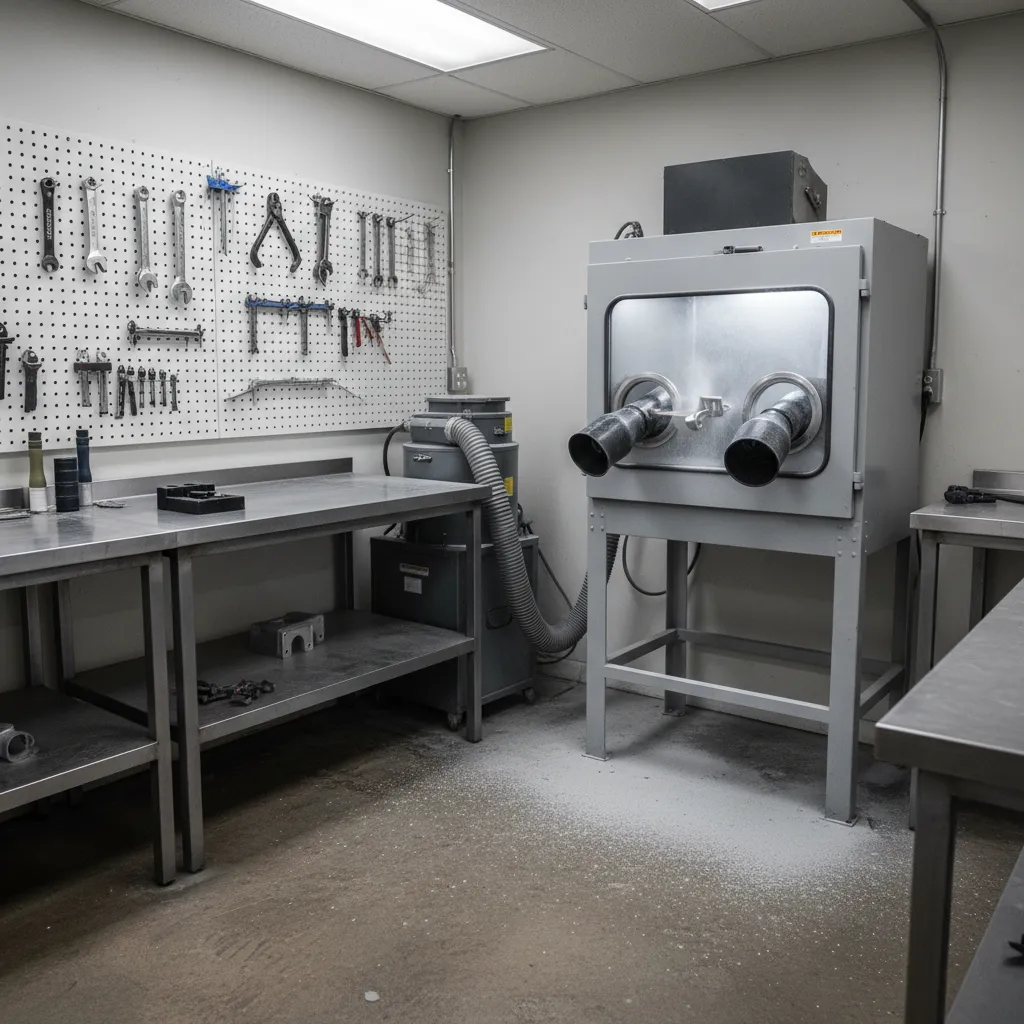
Surface is cleaned and made ready for coating
Degreasing, cleaning, and light abrasion remove contaminants and create the ideal surface for adhesion. This step determines coating quality.
Parts are coated under controlled environmental conditions
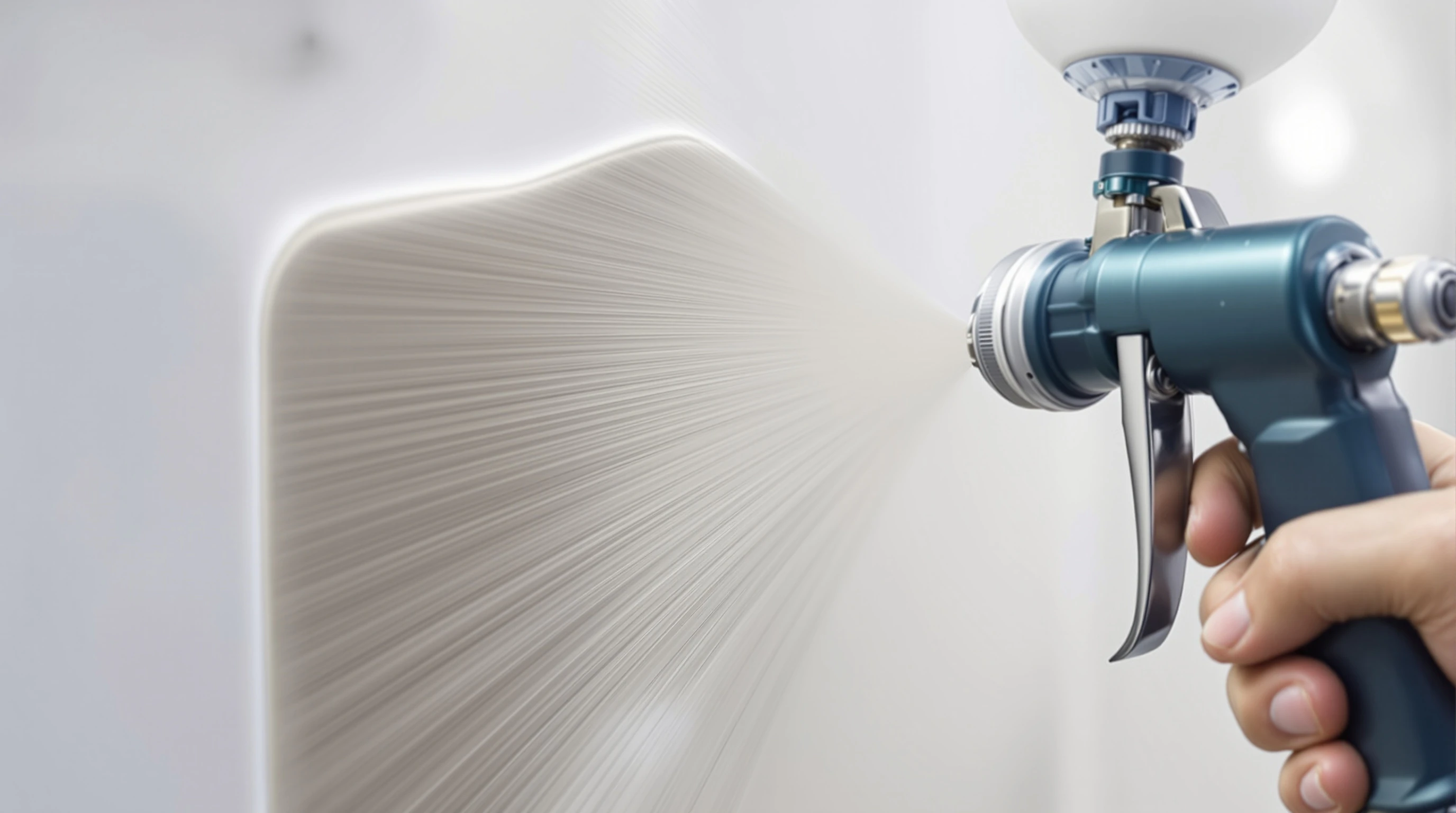
Cerakote® is applied in a climate-controlled spray booth held within 5 F of target temperature and 10% of target humidity. Calibrated HVLP equipment maintains consistent pressure and spray distance. Each coating batch is tracked by lot number, date, and applicator. Cure profiles are data-logged to ensure consistent color development, because cure temperature and duration directly affect final color appearance.
Ceramic coating is applied in controlled layers
We apply the coating using precision equipment, monitoring thickness and coverage. Each layer cures before the next is applied, building a durable finish.
First-part inspection confirms color conformance
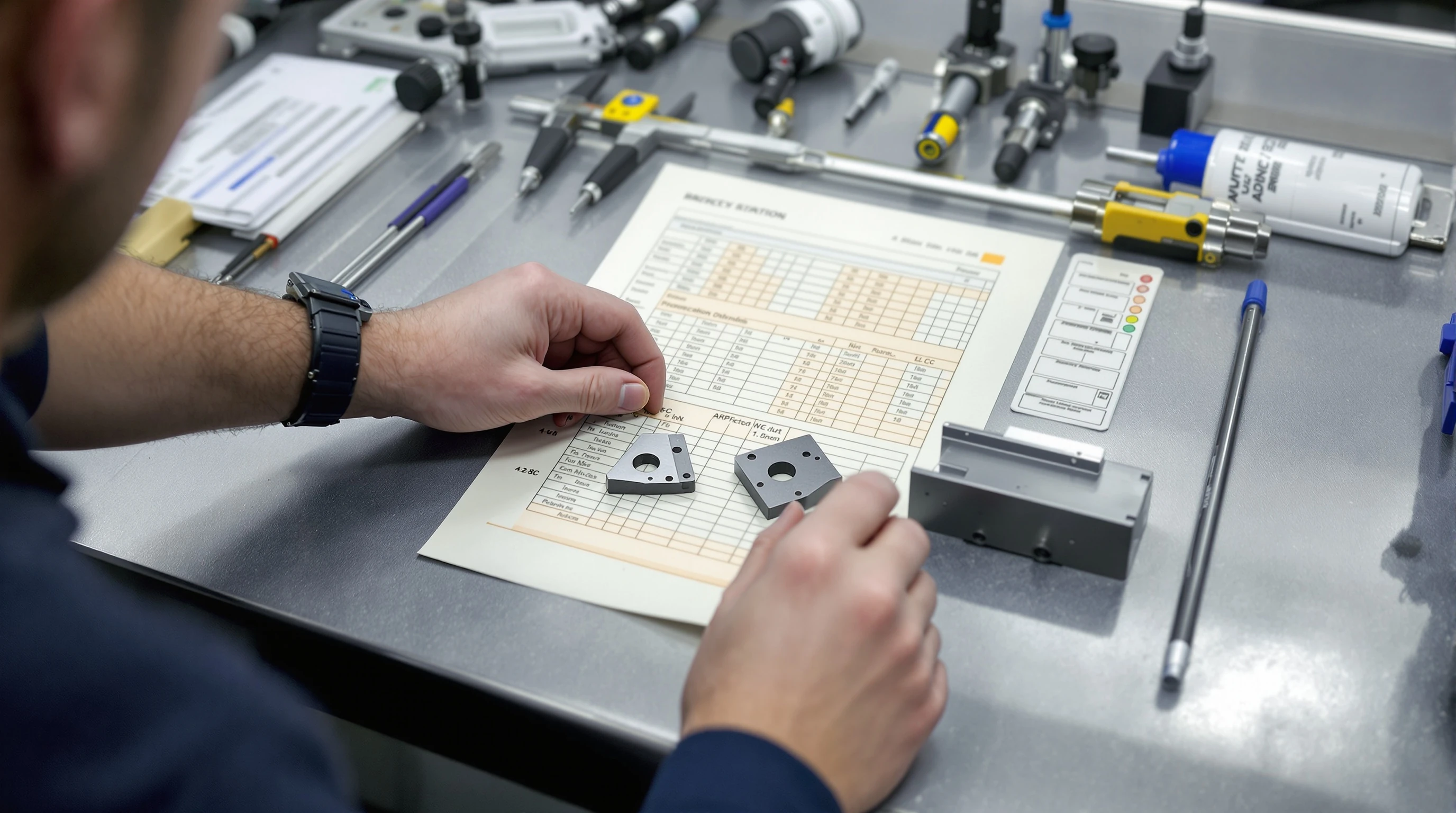
The first coated part from every production lot is measured by spectrophotometer against the master standard. Delta E is recorded in the AS9100 quality system. Parts are also inspected under a D65 lighting booth that simulates natural daylight. Any part with Delta E exceeding 1.5 is flagged for engineering review. Your Certificate of Conformance includes L*a*b* color data alongside thickness, adhesion, and visual inspection results.
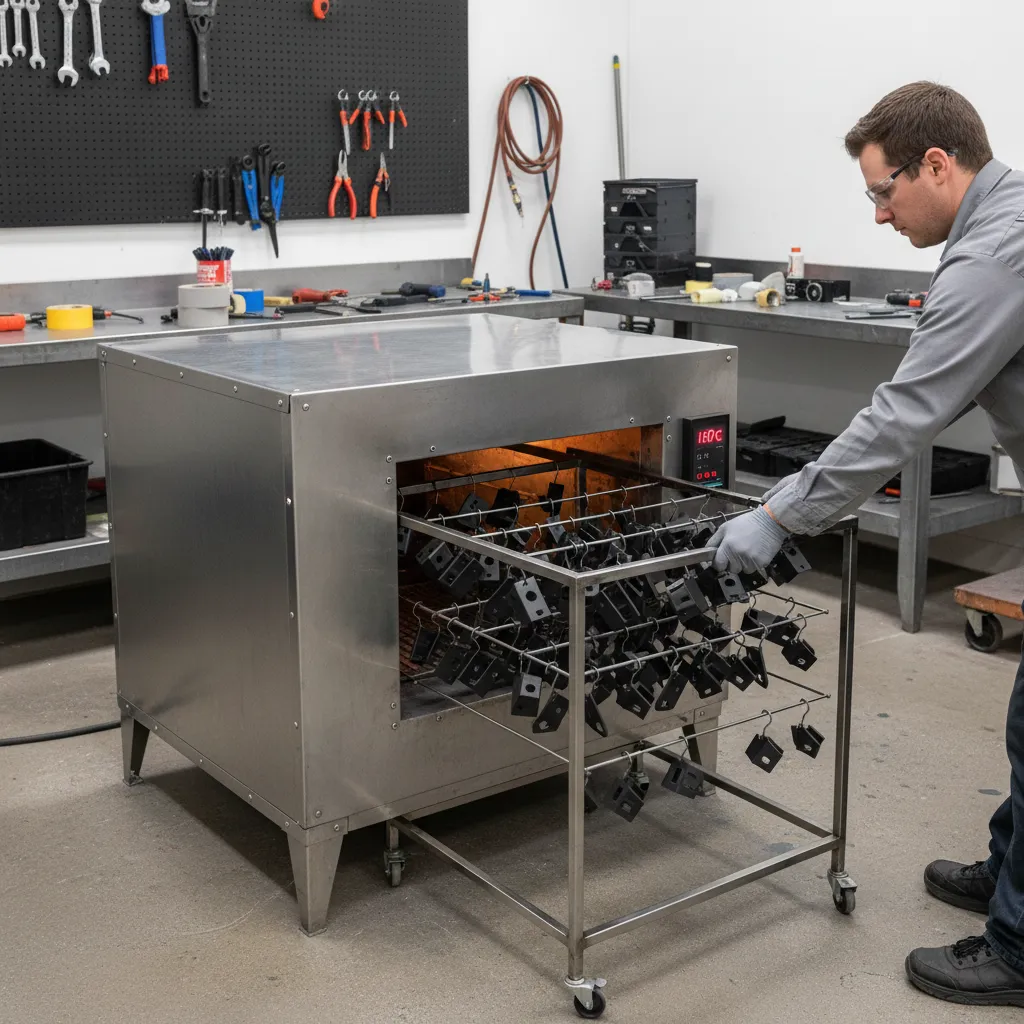
Coating hardens and bonds to the substrate
The coating cures under controlled temperature and humidity. We don't rush this phase. Full cure strength takes time, and we give it that time.
Color formulas and samples are retained for your program
One coated part from each production lot is archived in climate-controlled storage with a 10-year retention period. The custom color formula and cure profile are frozen for the full program duration. ColoradoKote monitors color stability across multi-year programs, and NIC Industries maintains Cerakote® formulation consistency at the manufacturing level. When you order replacement parts in Year 5, they match Year 1 production within Delta E 1.5.
Every part is measured and tested before shipment
We measure coating thickness, check for defects, and verify specifications. Documentation is prepared for your records. Only parts that pass leave our facility.
Frequently Asked Questions
Find answers about our coating processes and technical capabilities
Every Cerakote job at ColoradoKote is tracked under our AS9100:2015 quality management system with full material batch numbers, application parameters, cure profiles, and inspection data. Parts ship with a Certificate of Conformance documenting coating thickness (0.5-2 mils), adhesion, color consistency (Delta E 1.5), and all process variables. This level of documentation satisfies aerospace OEM and Tier 1 supplier quality requirements, including those we maintain for multiple manufacturers.
In many aerospace applications, yes. Cerakote delivers 3,000 hours of salt spray resistance (ASTM B117) compared to 336-1,000 hours for anodizing, and it eliminates the 20-60% fatigue debit that anodizing causes on aluminum substrates. It also works on titanium, Inconel, and composites, not just aluminum. We recommend discussing your specific specification requirements during quoting, as some programs require formal qualification testing for coating substitution.
Cabin interior components typically use H-Series Cerakote, which meets aerospace flammability requirements per third-party testing against Cerakote lab reports. The coating adds only 0.5-2 mils of thickness, preserving tolerances on latches, brackets, and trim components. Color consistency at Delta E 1.5 ensures visual uniformity across large cabin interior programs where hundreds or thousands of parts must match precisely.
At 0.5-2 mils thickness, Cerakote preserves interference fits and thread engagement that powder coating at 4-6 mils cannot maintain. We mask threaded holes, bearing surfaces, and critical datum features per documented masking plans reviewed against your engineering drawings. Over 20,000 parts coated with zero quality issues demonstrates the process control needed for precision aerospace hardware.
Yes. We run the complete preparation-to-coating sequence in-house: ultrasonic cleaning removes machining fluids and contaminants from blind holes and internal passages, chemical conversion coating (chromate or non-chromate) provides the adhesion-promoting base layer, and Cerakote ceramic coating delivers the final corrosion and wear barrier. Running this full stack under one AS9100 quality system eliminates handoff risk between multiple vendors and compresses your lead time.
Start Your Color Matching Program
Submit your color standard for evaluation. We respond within 24 hours with timeline and pricing.
