Ultrasonic Cleaning
Precision Cerakote ceramic coatings for aerospace, defense, and industrial components.


How Ultrasonic Cleaning Prepares Your Parts
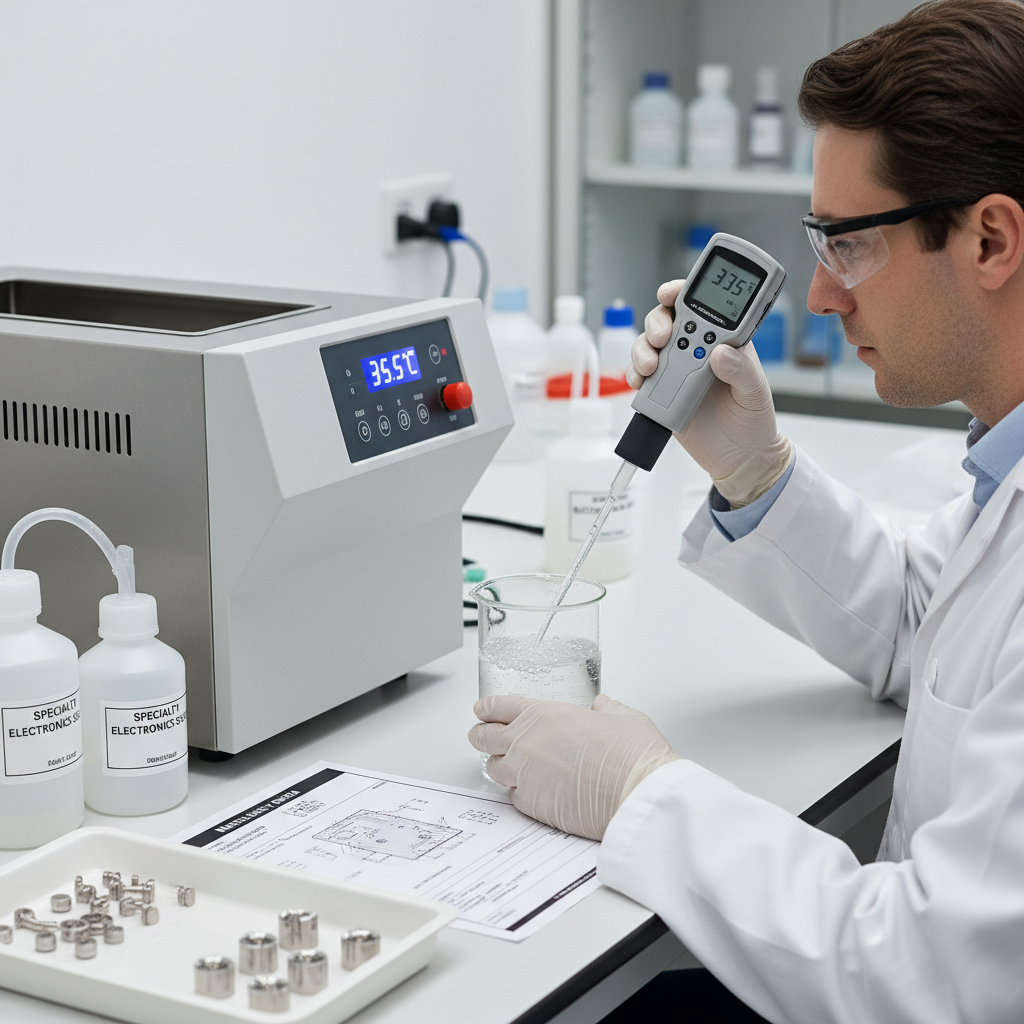
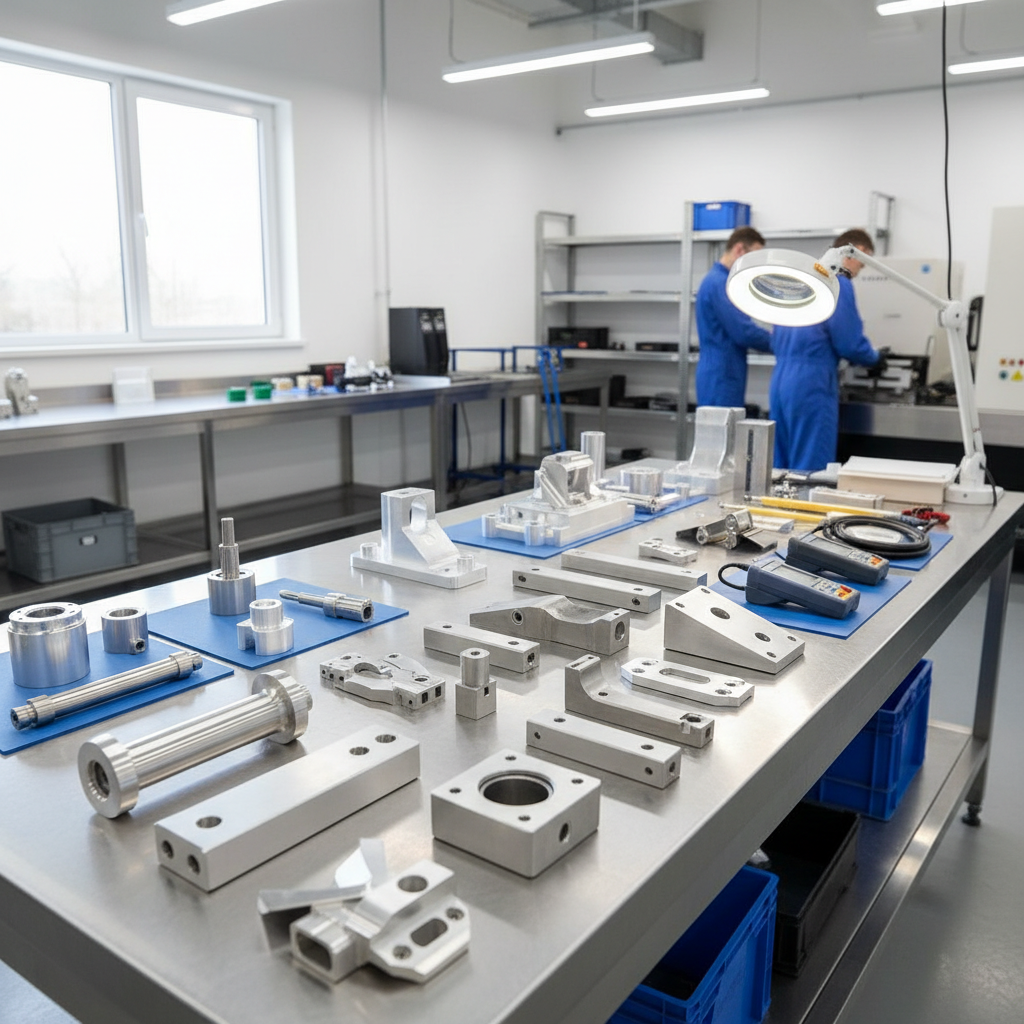
Where the highest levels of decontamination are required, ColoradoKote deploys ultrasonic cleaning. Parts are submerged in a heated cleaning solution matched to the substrate material. A 40 kHz transducer generates millions of microscopic cavitation bubbles that reach surfaces manual methods cannot access.
What Sets Us Apart
80% of coating failures trace to inadequate surface preparation. Many shops rely on manual solvent wipes, which miss embedded contaminants in complex geometries and depend entirely on operator consistency. ColoradoKote uses automated ultrasonic cavitation that delivers identical cleaning action on every part, every cycle.
Aerospace Standards
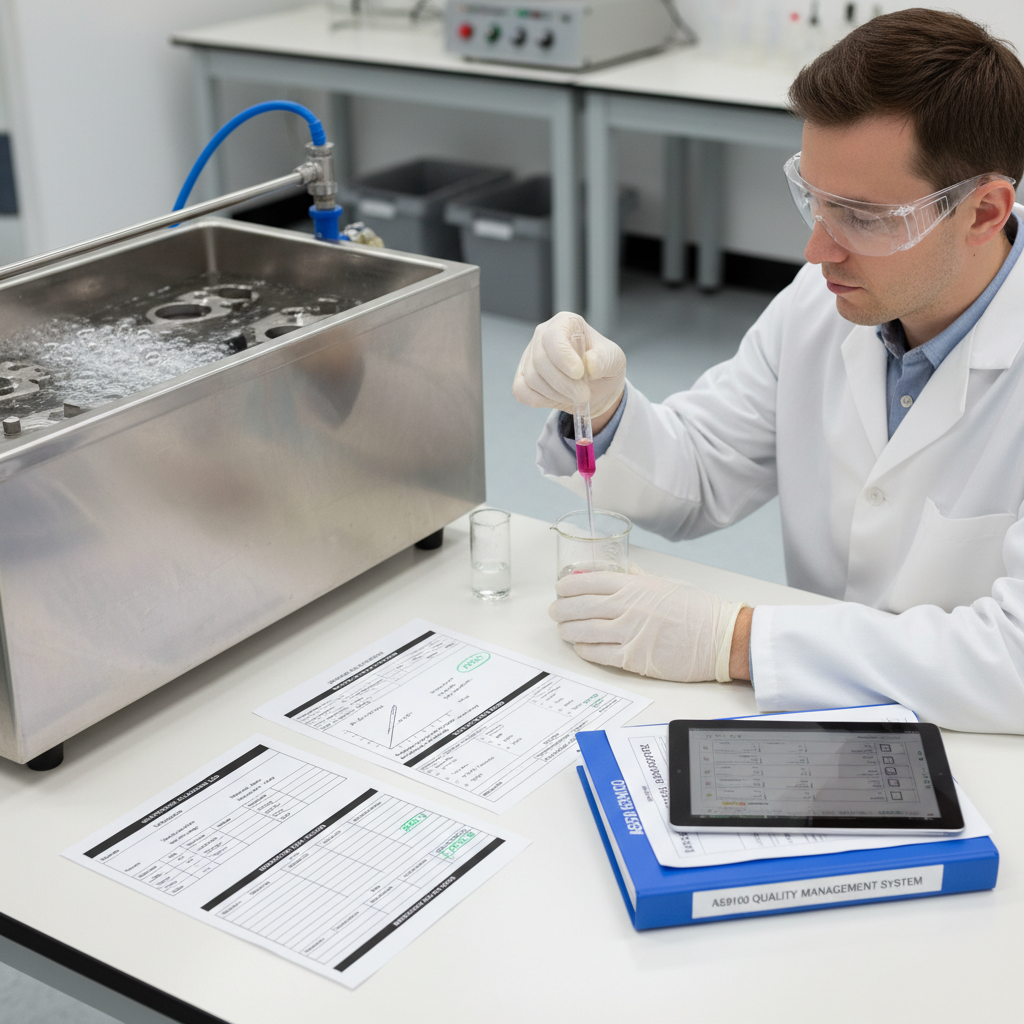
Every cleaning cycle is recorded with solution type, concentration, temperature, frequency, cycle duration, and verification results. Solution concentration is monitored through weekly titration testing. Your auditors receive objective quality evidence showing surface preparation met specification before coating began.


What proper surface preparation delivers
Coating adhesion, consistency, and longevity start with contamination-free surfaces. The data shows what changes when preparation is done right.

ASTM D3359 5B Adhesion Rating
Contamination-free surfaces bond with ceramic coatings at the molecular level. Our cleaned parts consistently achieve 5B ratings on the cross-cut adhesion scale, the highest grade possible, with zero coating removal during testing.
Complex Geometries Fully Cleaned
Cavitation bubbles penetrate blind holes, internal threads, and additive manufacturing lattice structures that manual wipes and spray methods cannot access. Every surface receives identical cleaning action regardless of part complexity.
Full AS9100 Documentation
Solution chemistry, temperature, cycle duration, and verification results are recorded for every batch. Complete cleaning records integrate with coating documentation to provide end-to-end traceability your auditors require.
Ultrasonic cleaning parameters for your application
| Specification | Value | Test Method |
|---|---|---|
| Adhesion Rating (post-clean + coat) | ASTM D3359 5B (no coating removal) | ASTM D3359 |
| Solvent Cleaning Standard | Exceeds SSPC-SP 1 requirements | SSPC-SP 1 |
| Ultrasonic Frequency | 40 kHz | Equipment calibration |
| Solution Temperature | 120-160 F | Thermocouple monitoring |
| Cycle Time | 10-30 minutes | Contamination-dependent |
| Rinse Cycles | Minimum 2x DI water | Process specification |
| Verification Method | Water-break test + white-glove | Visual / tactile |
| Substrate Compatibility | All metals, AM polymers, composites | Solution chemistry matched |
Certifications: AS9100 | ISO 9001 | ITAR | Cerakote® Advanced Applicator
Parts received, inspected, and logged into tracking
Components arrive and are verified against your purchase order. Incoming condition is documented with photographs, noting any pre-existing contamination, damage, or handling marks. Lot numbers are assigned, and AS9100 chain of custody begins. Every part is tracked from this point through final shipment.
Contamination type identified, solution selected
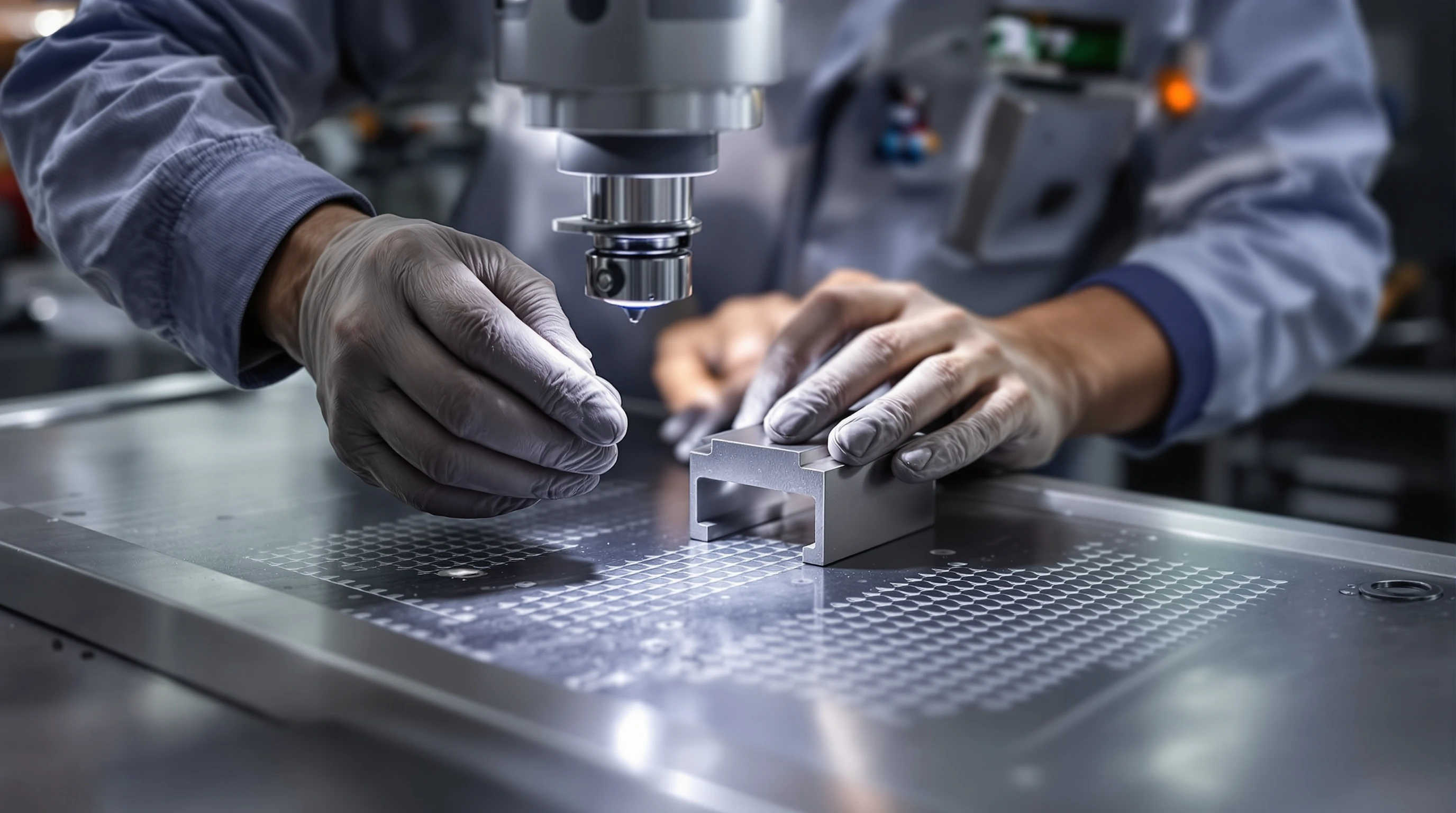
Technicians assess each part for contamination type, machining fluids, fingerprint oils, support material residue, or embedded particulates. Substrate material determines solution chemistry: alkaline cleaners for aluminum, neutral formulations for titanium to prevent hydrogen embrittlement, and polymer-safe solutions for AM parts. Temperature and cycle time are set based on contamination severity.
Surface is cleaned and made ready for coating
Degreasing, cleaning, and light abrasion remove contaminants and create the ideal surface for adhesion. This step determines coating quality.
40 kHz cavitation removes all surface contaminants
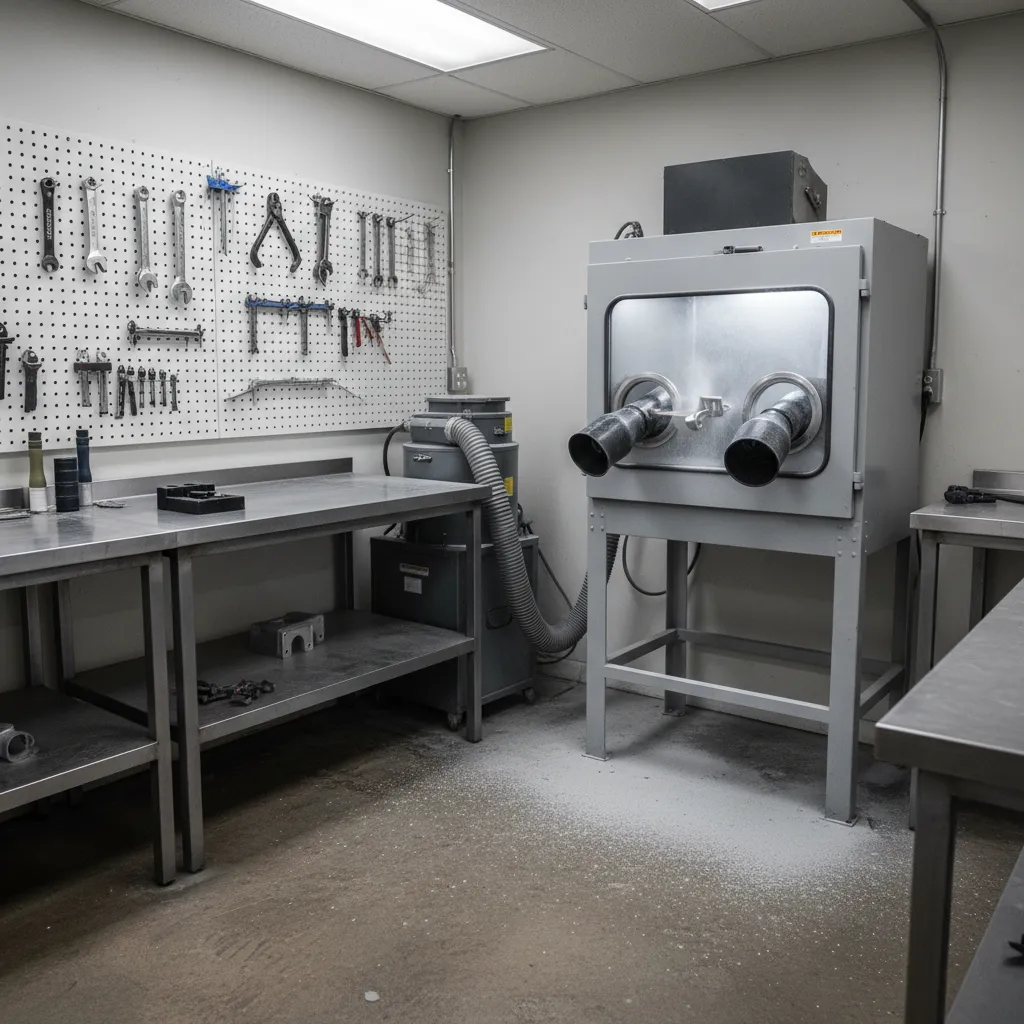
Parts are submerged in the heated cleaning solution, and the 40 kHz transducer activates. Millions of cavitation bubbles form and implode against every surface, penetrating blind holes, internal threads, and lattice structures. Cycle duration runs 10 to 30 minutes depending on contamination level. A minimum of two DI water rinses follow, then heated air drying or nitrogen purge completes the cycle.
Ceramic coating is applied in controlled layers
We apply the coating using precision equipment, monitoring thickness and coverage. Each layer cures before the next is applied, building a durable finish.
Contamination-free surface confirmed before coating
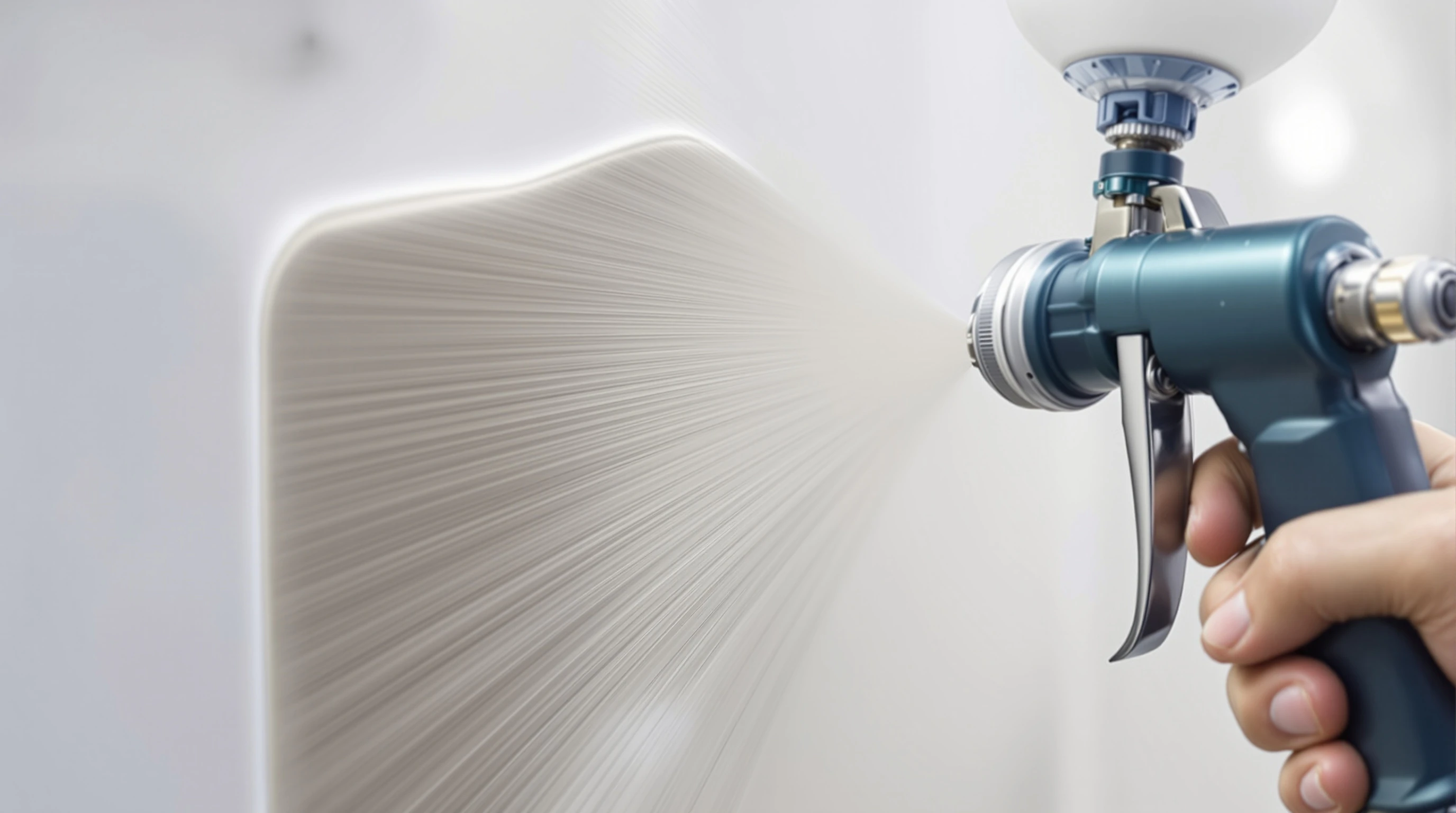
Water-break testing verifies that DI water sheets uniformly across the surface with no beading, confirming the absence of oils and residues. White-glove inspection checks for particulate transfer. For critical aerospace applications, dyne pen testing measures surface energy when specifications require it. Parts that do not pass verification are re-cleaned before proceeding.
Coating hardens and bonds to the substrate
The coating cures under controlled temperature and humidity. We don't rush this phase. Full cure strength takes time, and we give it that time.
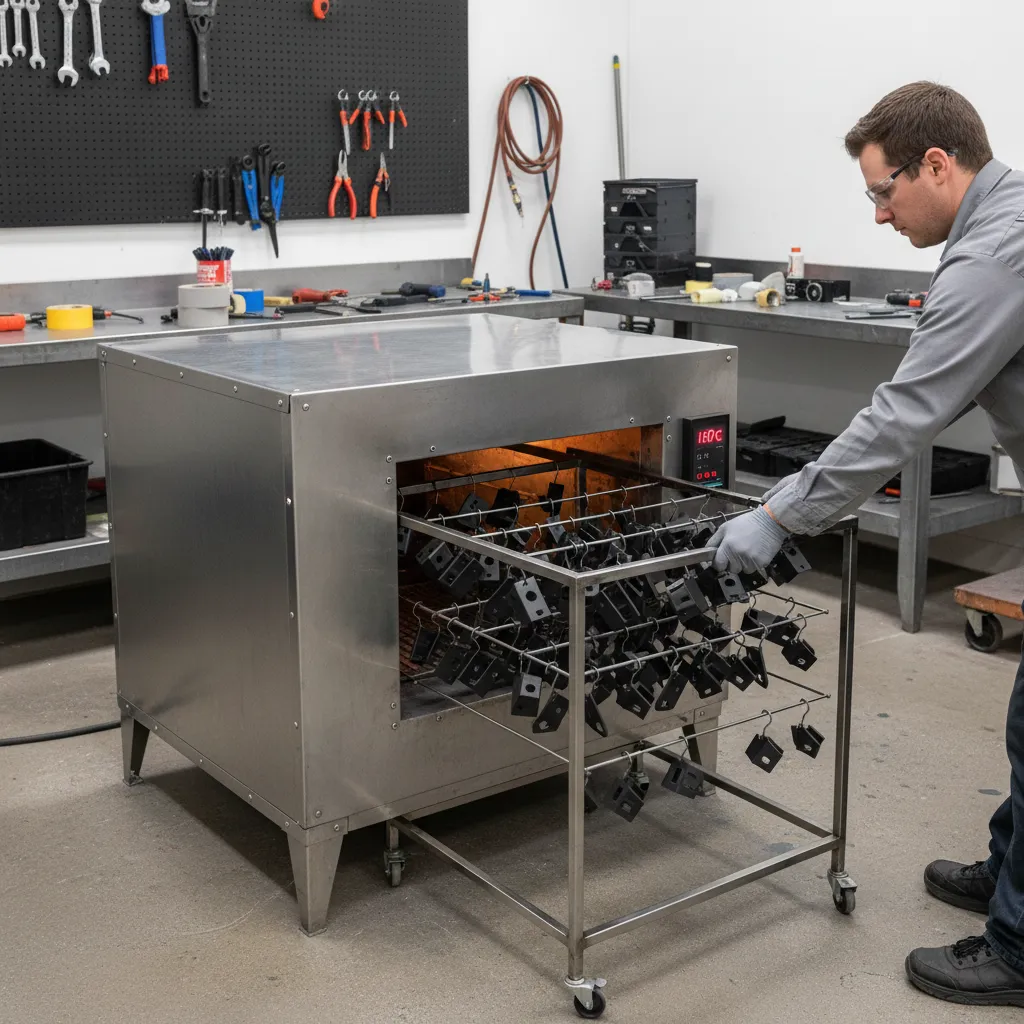
Clean parts move directly into the coating process
Verified parts transfer immediately to the coating application stage to prevent re-contamination from handling or environmental exposure. Process parameters from the cleaning cycle, solution type, temperature, duration, and verification results, are recorded in the batch traveler. This documentation integrates with the coating record to provide complete traceability from raw part to finished component.
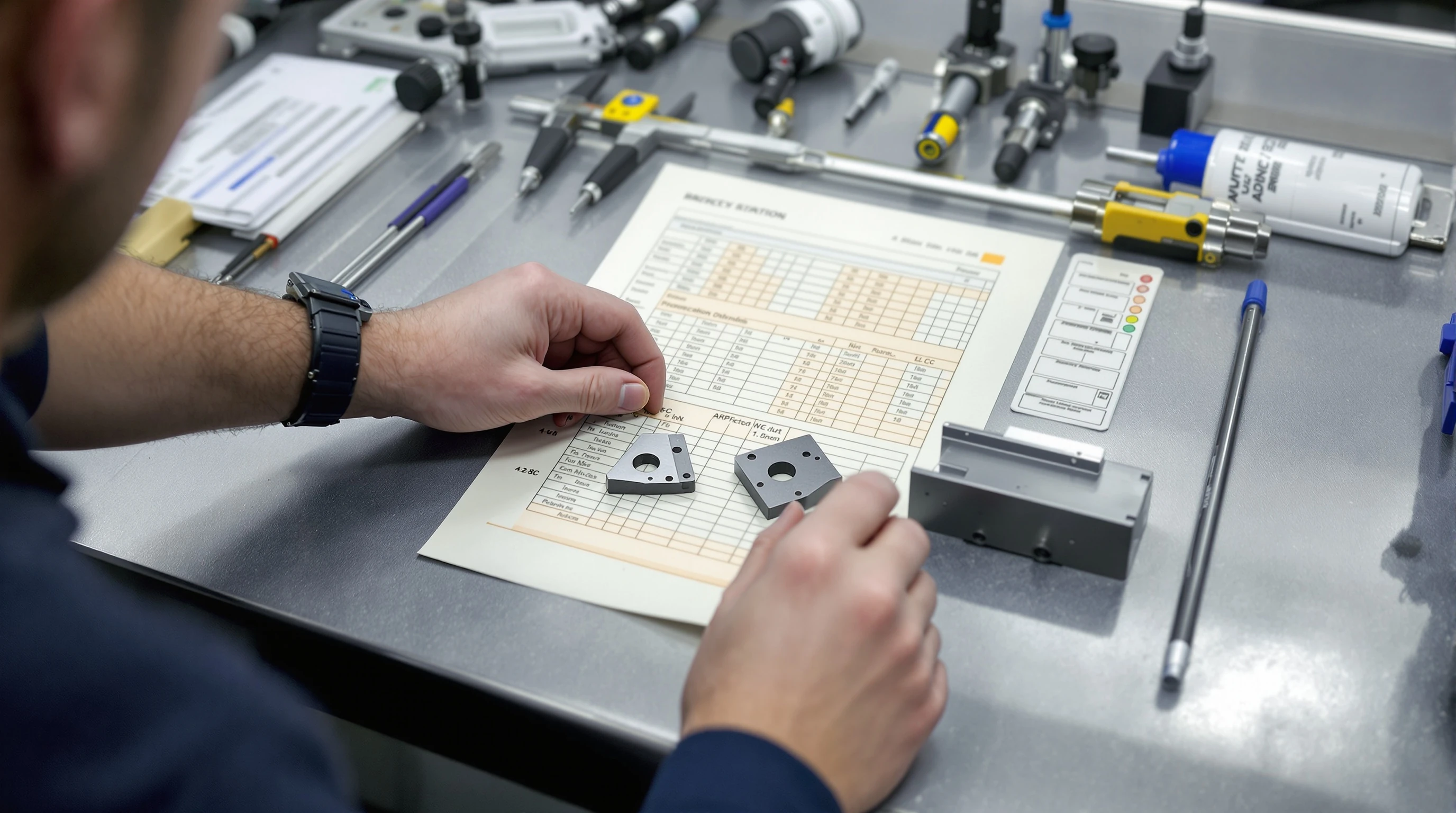
Every part is measured and tested before shipment
We measure coating thickness, check for defects, and verify specifications. Documentation is prepared for your records. Only parts that pass leave our facility.
Frequently Asked Questions
Find answers about our coating processes and technical capabilities
Every Cerakote job at ColoradoKote is tracked under our AS9100:2015 quality management system with full material batch numbers, application parameters, cure profiles, and inspection data. Parts ship with a Certificate of Conformance documenting coating thickness (0.5-2 mils), adhesion, color consistency (Delta E 1.5), and all process variables. This level of documentation satisfies aerospace OEM and Tier 1 supplier quality requirements, including those we maintain for multiple manufacturers.
In many aerospace applications, yes. Cerakote delivers 3,000 hours of salt spray resistance (ASTM B117) compared to 336-1,000 hours for anodizing, and it eliminates the 20-60% fatigue debit that anodizing causes on aluminum substrates. It also works on titanium, Inconel, and composites, not just aluminum. We recommend discussing your specific specification requirements during quoting, as some programs require formal qualification testing for coating substitution.
Cabin interior components typically use H-Series Cerakote, which meets aerospace flammability requirements per third-party testing against Cerakote lab reports. The coating adds only 0.5-2 mils of thickness, preserving tolerances on latches, brackets, and trim components. Color consistency at Delta E 1.5 ensures visual uniformity across large cabin interior programs where hundreds or thousands of parts must match precisely.
At 0.5-2 mils thickness, Cerakote preserves interference fits and thread engagement that powder coating at 4-6 mils cannot maintain. We mask threaded holes, bearing surfaces, and critical datum features per documented masking plans reviewed against your engineering drawings. Over 20,000 parts coated with zero quality issues demonstrates the process control needed for precision aerospace hardware.
Yes. We run the complete preparation-to-coating sequence in-house: ultrasonic cleaning removes machining fluids and contaminants from blind holes and internal passages, chemical conversion coating (chromate or non-chromate) provides the adhesion-promoting base layer, and Cerakote ceramic coating delivers the final corrosion and wear barrier. Running this full stack under one AS9100 quality system eliminates handoff risk between multiple vendors and compresses your lead time.
Get your surface prep right
Tell us about your parts. We respond within 2 business days with a cleaning protocol.