
Sandblasting and Surface Prep
Precision Cerakote ceramic coatings for aerospace, defense, and industrial components.


How Sandblasting and Surface Prep Works at ColoradoKote
Media blasting at 80-100 PSI (40-60 PSI for additive manufactured parts) creates a 0.5-1 mil anchor profile that mechanically bonds coatings to the substrate. Blast media is selected for each substrate material, and pressure is calibrated to achieve SSPC-SP 10 near-white blast cleanliness while maintaining ±0.0002" tolerance.
What Sets Us Apart
ColoradoKote matches blast media type and pressure to each substrate rather than running a single generic profile. Aluminum, titanium, steel, and AM polymers each receive optimized blast parameters that achieve the target anchor profile without over-blasting or substrate damage. This precision is why our subsequent Cerakote® applications achieve consistent adhesion across every part geometry.
Aerospace Standards
Every blasting operation is documented with media type, particle size, blast pressure, nozzle distance, and resulting surface profile measurement under AS9100 controls. Profile depth is verified with replica tape or profilometer readings. Documentation confirms SSPC-SP 10 near-white blast compliance before parts advance to coating application.


What proper surface preparation delivers
Surface prep determines coating adhesion, corrosion resistance, and service life. Here is what SSPC-SP 10 compliance means for your parts.

0.5-1 mil anchor Profile for Maximum Bond
A properly profiled surface creates mechanical interlocking points that anchor coatings at the molecular level. The 0.5-1 mil profile depth, verified per SSPC-SP 10, provides the foundation that enables Cerakote® to achieve its full 3,000+ hour salt spray performance specification.
±0.0002" Tolerance Maintenance
Calibrated blast pressure and media selection remove surface contaminants and create adhesion profile without removing base material beyond tolerance. AM parts receive reduced 40-60 PSI treatment to preserve lattice structures and thin walls while still achieving proper surface preparation for coating adhesion.
SSPC-SP 10 Near-White Blast Standard
Near-white blast cleaning removes mill scale, rust, old coatings, and embedded contaminants to a verified cleanliness standard. Combined with ultrasonic cleaning prior to blasting, this preparation sequence eliminates the surface contamination that causes 80% of coating adhesion failures in production.
Technical specifications for sandblasting and surface preparation
| Specification | Value | Test Method |
|---|---|---|
| Cleanliness Level | SSPC-SP 10 Near-White Blast (95% removal) | SSPC-SP 10 |
| Surface Profile | 0.5-1 mil (adjustable by application) | ASTM D4417 / SSPC-PA 2 |
| Profile Measurement Accuracy | ±0.2 mil | Testex Tape / Stylus Profilometer |
| Blast Pressure Range | 80-100 PSI (application-specific) | Process Control |
| Blast Media | Aluminum oxide, Aluminum Oxide and Garnet Sand (100-120 grit) | Media Specification |
| Dimensional Control | ±0.0002" tolerance maintenance | CMM Verification |
| Post-Blast Coating Window | 2-4 hours maximum | Industry Best Practice |
| Visual Inspection | 10x magnification minimum | SSPC-VIS 1 |
| Cleanliness Verification | White cloth wipe test | SSPC-SP 10 Supplement |
Certifications: AS9100 | ISO 9001 | ITAR | SSPC Operator Certified
Parts received, inspected, and baselined
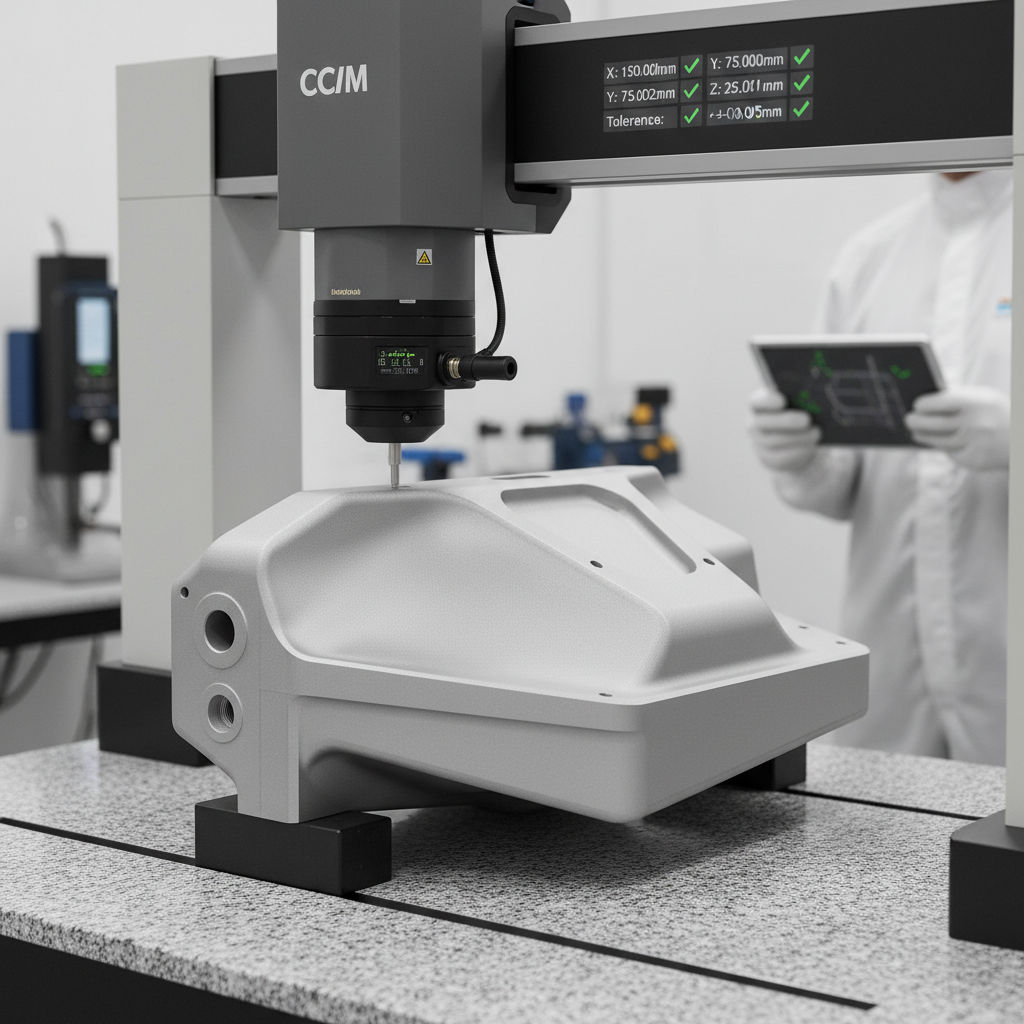
Parts arrive and are logged into our AS9100 tracking system. We verify quantities against your purchase order, photograph incoming condition, and assign lot numbers. For AM and critical-tolerance parts, CMM measurements establish a dimensional baseline before any blasting begins. Chain of custody starts here.
Contaminants removed before blasting begins
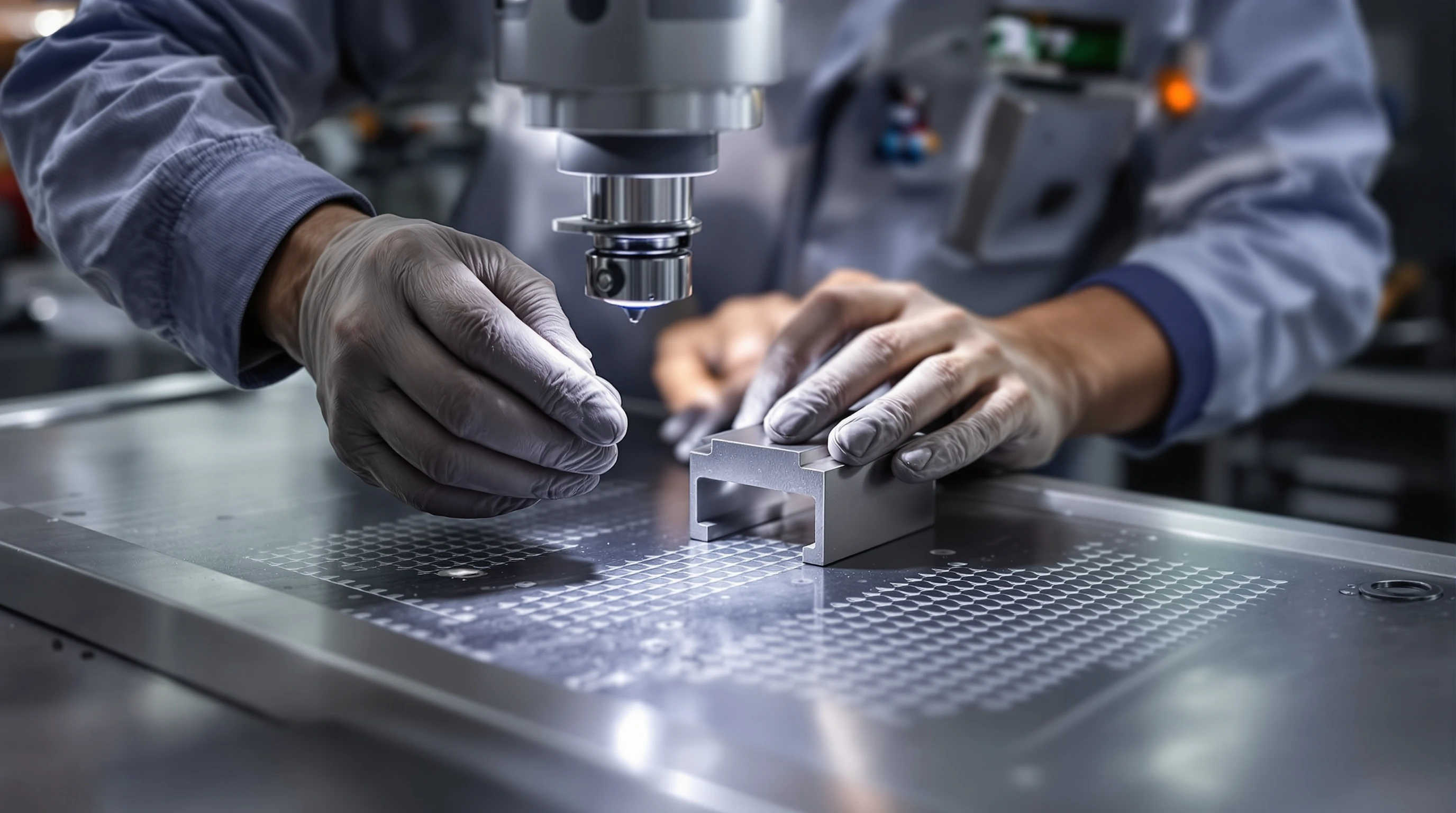
Surfaces are solvent-cleaned per SSPC-SP 1 to remove oils, greases, and manufacturing residues. Complex geometries and internal features go through ultrasonic cleaning followed by deionized water rinse and compressed air drying. Pre-cleaning prevents blast media contamination and ensures uniform surface preparation across the entire part.
Surface is cleaned and made ready for coating
Degreasing, cleaning, and light abrasion remove contaminants and create the ideal surface for adhesion. This step determines coating quality.
Critical features protected with precision masking
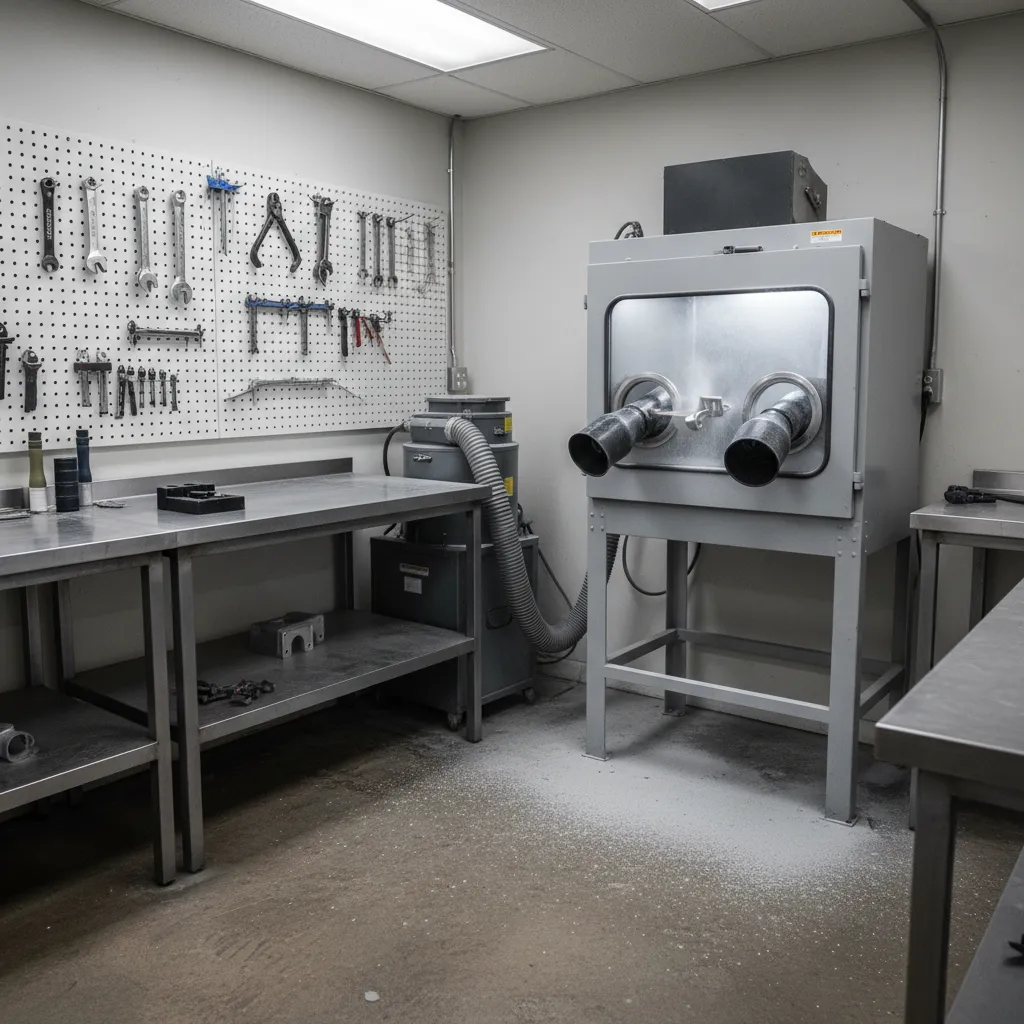
High-temperature silicone masking protects threaded holes, precision mating surfaces, internal passages, and areas requiring zero coating buildup. Masking locations are documented in the job traveler for AS9100 traceability. Tolerances as tight as +/-0.001" on mating surfaces are preserved through selective masking before any media contacts the part.
Ceramic coating is applied in controlled layers
We apply the coating using precision equipment, monitoring thickness and coverage. Each layer cures before the next is applied, building a durable finish.
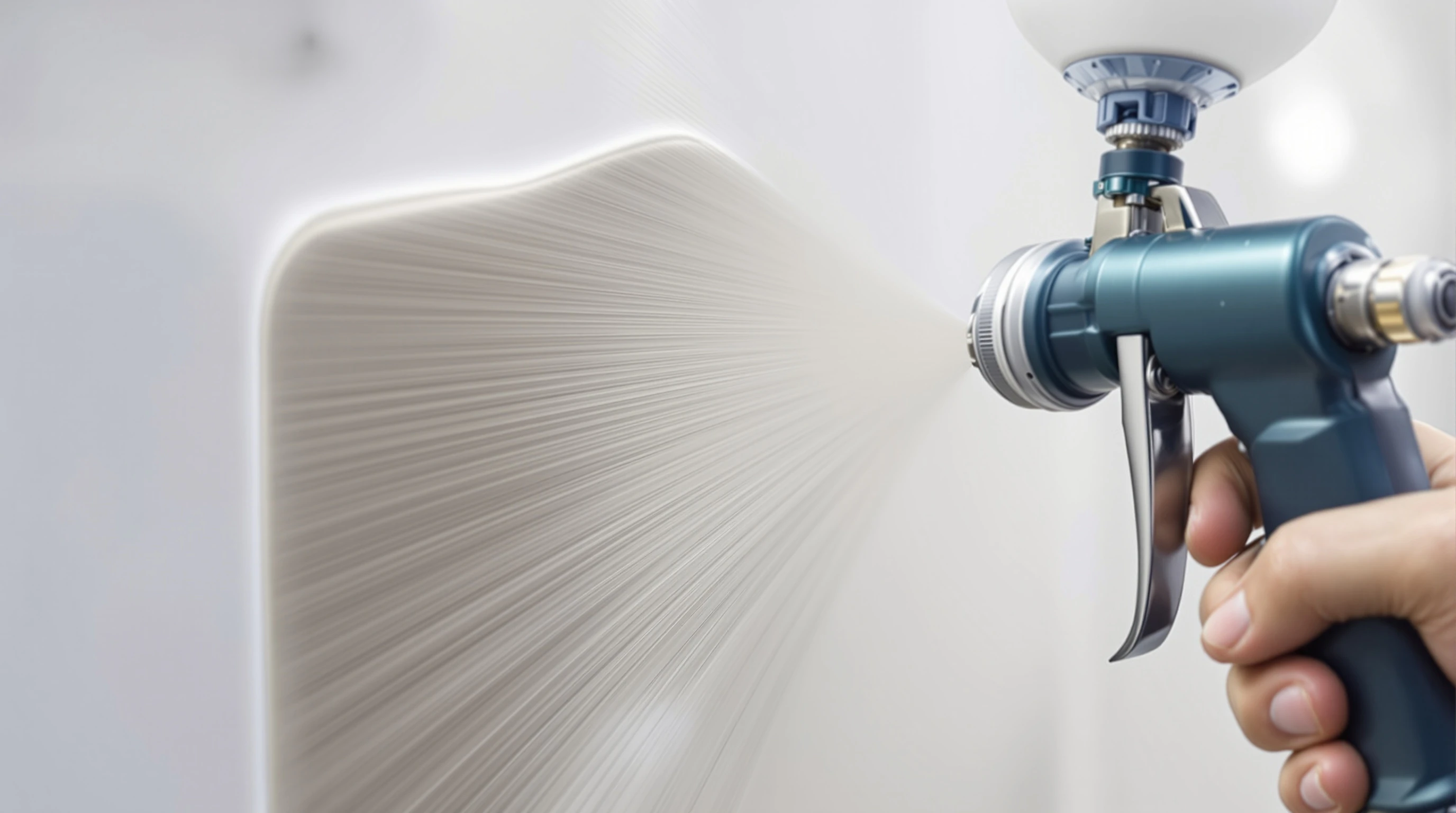
SSPC-SP 10 near-white blast in a controlled environment
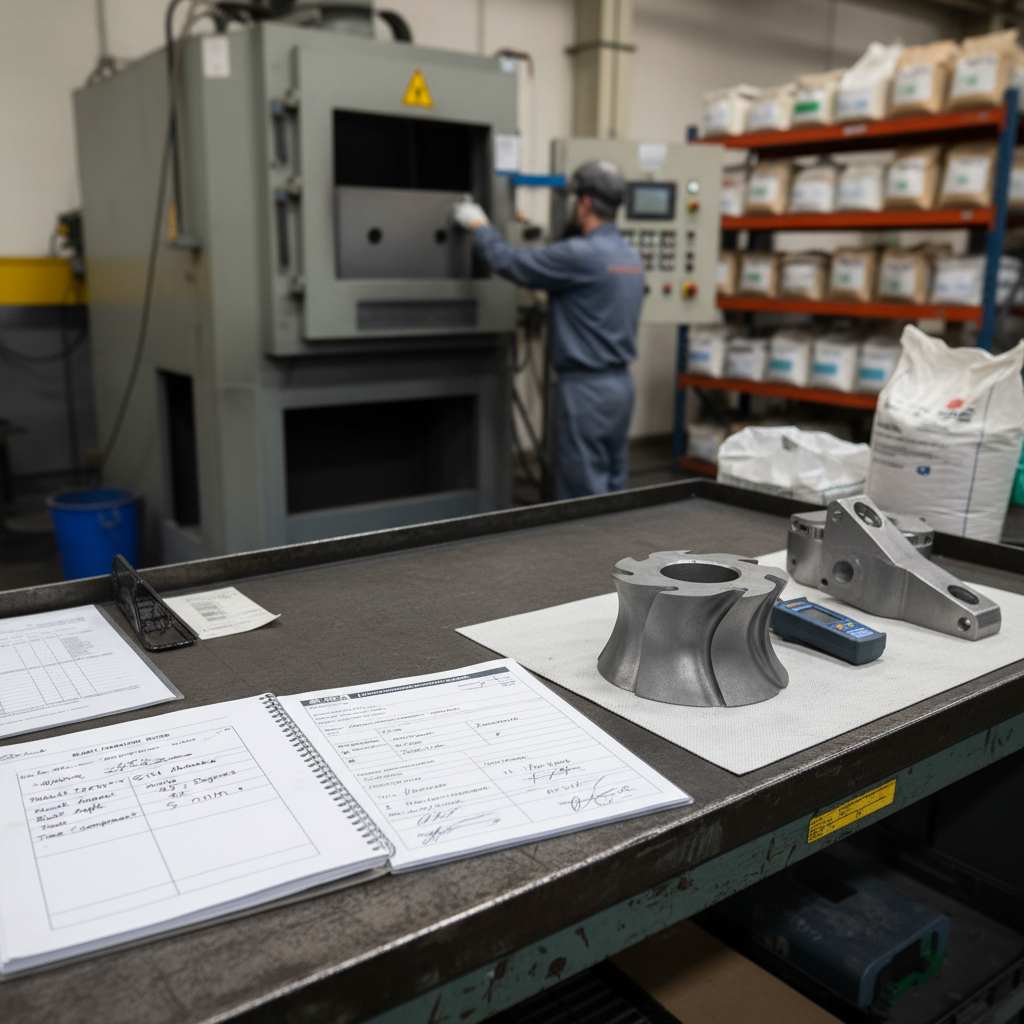
Blasting occurs in a climate-controlled booth with temperature and humidity monitoring. Media type and grit size are selected for the specific substrate: aluminum oxide at 60-120 grit for metals, Aluminum Oxide and Garnet Sand at 120-180 grit for polymers. Blast pressure ranges from 80-100 PSI based on material and geometry. Operators verify surface profile in-process using comparators to confirm uniform 0.5-1 mil anchor pattern and 95% contaminant removal.
Coating hardens and bonds to the substrate
The coating cures under controlled temperature and humidity. We don't rush this phase. Full cure strength takes time, and we give it that time.
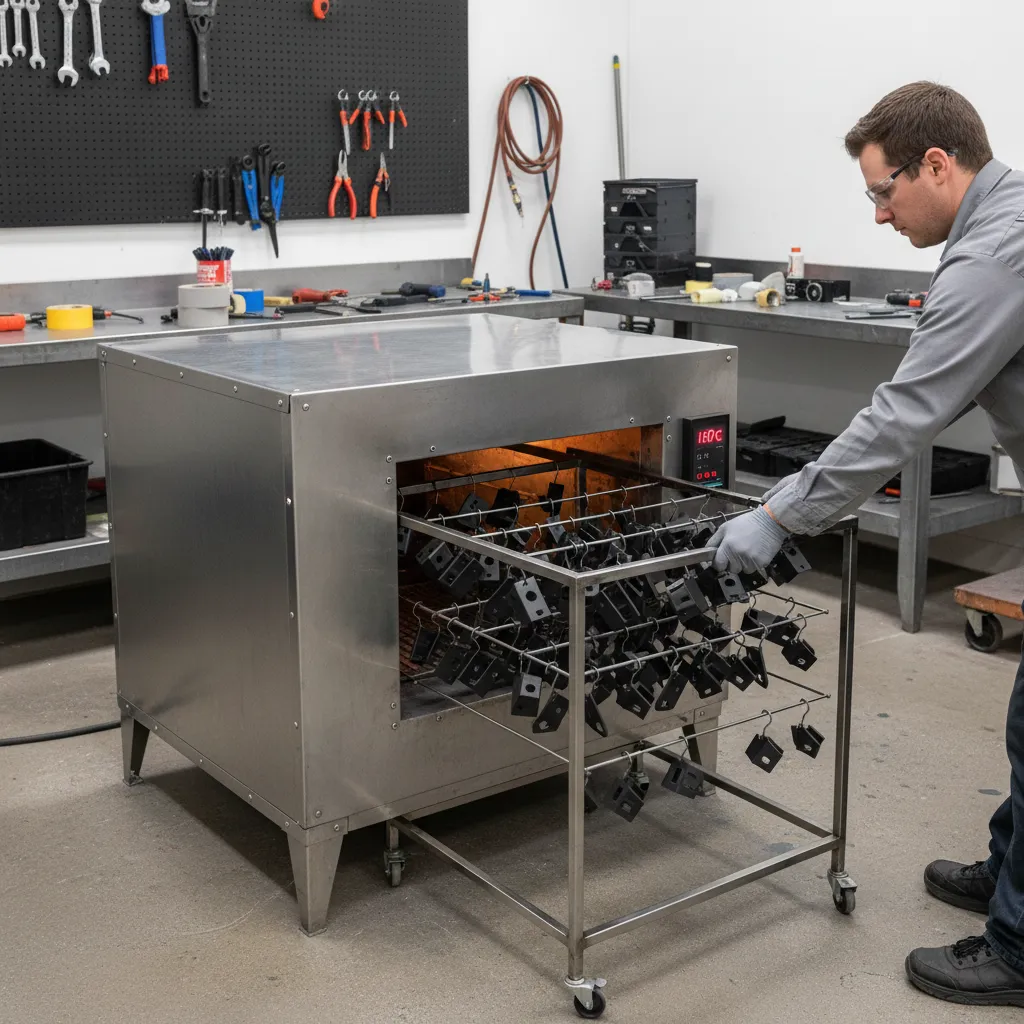
Profile, dimensions, and cleanliness verified before coating
Final inspection confirms surface profile by Testex tape or stylus profilometer, dimensional integrity by CMM comparison to pre-blast baseline, and cleanliness by white cloth wipe test and 10x magnification review. All measurements are documented in the AS9100 quality record. Parts transfer to coating within 2-4 hours to prevent oxidation.
Every part is measured and tested before shipment
We measure coating thickness, check for defects, and verify specifications. Documentation is prepared for your records. Only parts that pass leave our facility.
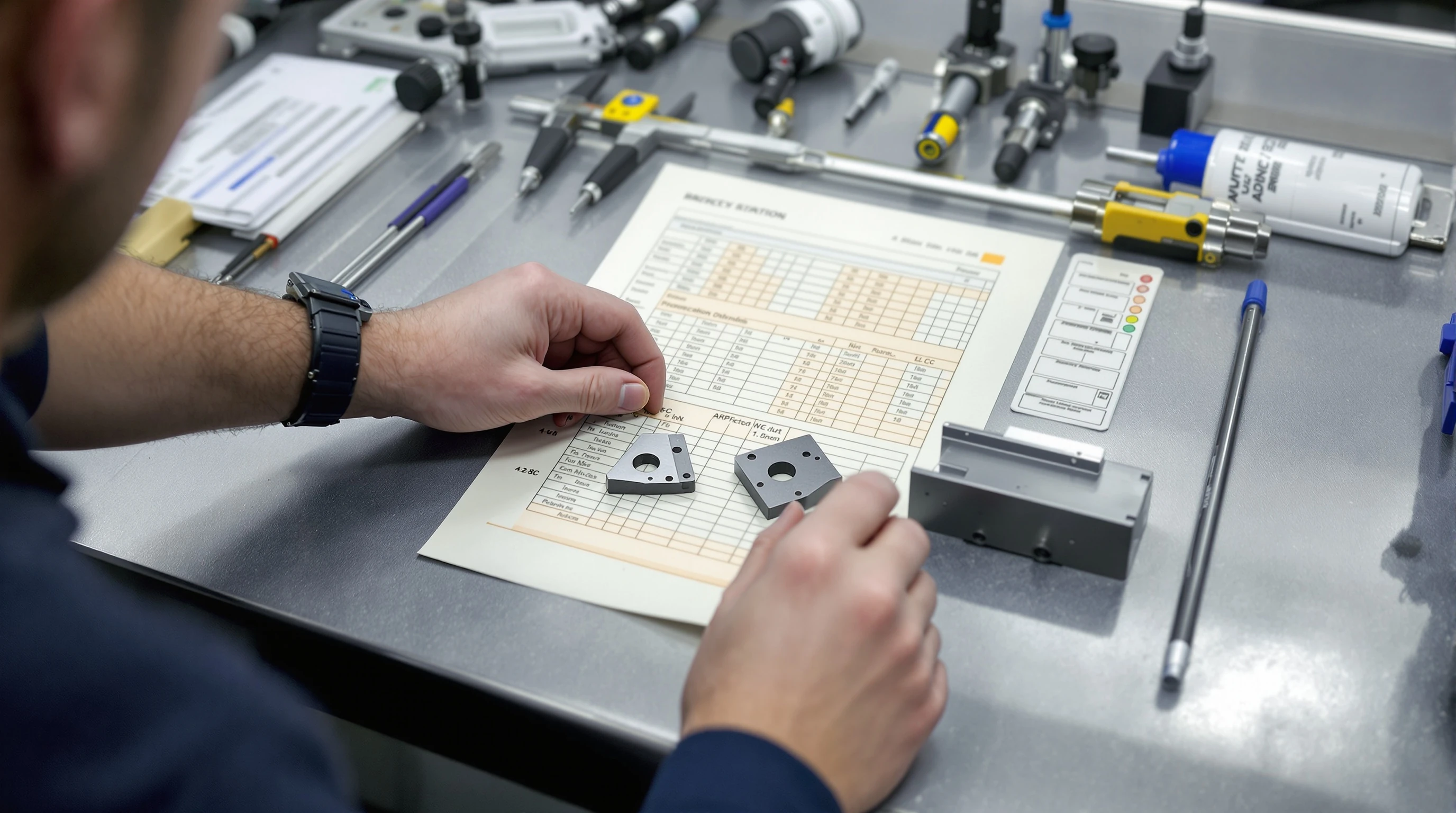
Frequently Asked Questions
Find answers about our coating processes and technical capabilities
Every Cerakote job at ColoradoKote is tracked under our AS9100:2015 quality management system with full material batch numbers, application parameters, cure profiles, and inspection data. Parts ship with a Certificate of Conformance documenting coating thickness (0.5-2 mils), adhesion, color consistency (Delta E 1.5), and all process variables. This level of documentation satisfies aerospace OEM and Tier 1 supplier quality requirements, including those we maintain for multiple manufacturers.
In many aerospace applications, yes. Cerakote delivers 3,000 hours of salt spray resistance (ASTM B117) compared to 336-1,000 hours for anodizing, and it eliminates the 20-60% fatigue debit that anodizing causes on aluminum substrates. It also works on titanium, Inconel, and composites, not just aluminum. We recommend discussing your specific specification requirements during quoting, as some programs require formal qualification testing for coating substitution.
Cabin interior components typically use H-Series Cerakote, which meets aerospace flammability requirements per third-party testing against Cerakote lab reports. The coating adds only 0.5-2 mils of thickness, preserving tolerances on latches, brackets, and trim components. Color consistency at Delta E 1.5 ensures visual uniformity across large cabin interior programs where hundreds or thousands of parts must match precisely.
At 0.5-2 mils thickness, Cerakote preserves interference fits and thread engagement that powder coating at 4-6 mils cannot maintain. We mask threaded holes, bearing surfaces, and critical datum features per documented masking plans reviewed against your engineering drawings. Over 20,000 parts coated with zero quality issues demonstrates the process control needed for precision aerospace hardware.
Yes. We run the complete preparation-to-coating sequence in-house: ultrasonic cleaning removes machining fluids and contaminants from blind holes and internal passages, chemical conversion coating (chromate or non-chromate) provides the adhesion-promoting base layer, and Cerakote ceramic coating delivers the final corrosion and wear barrier. Running this full stack under one AS9100 quality system eliminates handoff risk between multiple vendors and compresses your lead time.
Start your surface prep project
Request a surface prep quote. We respond within 24 hours with process recommendations and pricing.
