
Aesthetic Finishing for Aerospace
Precision Cerakote ceramic coatings for aerospace, defense, and industrial components.
The Color Consistency Challenge in Aerospace
Visible mismatch drives rejection rates and rework costs
The challenge
Harsh environments demand coatings that hold.
The solution
ColoradoKote ceramic coating stops corrosion cold.
Why Cerakote for Aerospace Aesthetics
Color precision that production programs depend on

Delta E ≤1 Color Consistency
Spectrophotometer-verified on every batch. Locked inorganic pigment formulas eliminate the batch-to-batch drift that plagues dye-based anodizing processes. Part one matches part 90,000.
Multi-Substrate Color Match
One color formula coats aluminum, titanium, steel, and composites to identical appearance. Eliminates the multi-vendor approach that creates visible color gaps on mixed-material assemblies.
Thin-Film at 0.5-2 Mils
Cabin hardware maintains dimensional tolerances after coating. Seat tracks, hinge pins, and latch mechanisms fit without post-coating modification. No weight penalty.
200+ Colors Including Fed-Std 595
Full Federal Standard 595 palette plus metallics and custom brand matches. AS9100 documentation with L*a*b* data on every Certificate of Conformance.
Aesthetic Finishing Specifications

Our Aerospace Aesthetic Finishing Process
Color-locked formulas with spectrophotometric verification at every stage
Surface Preparation & Color Planning
Substrate-specific cleaning and profiling. Color specification confirmed against master standard. Multi-material assemblies mapped for consistent finish across all substrates.
Controlled Coating Application
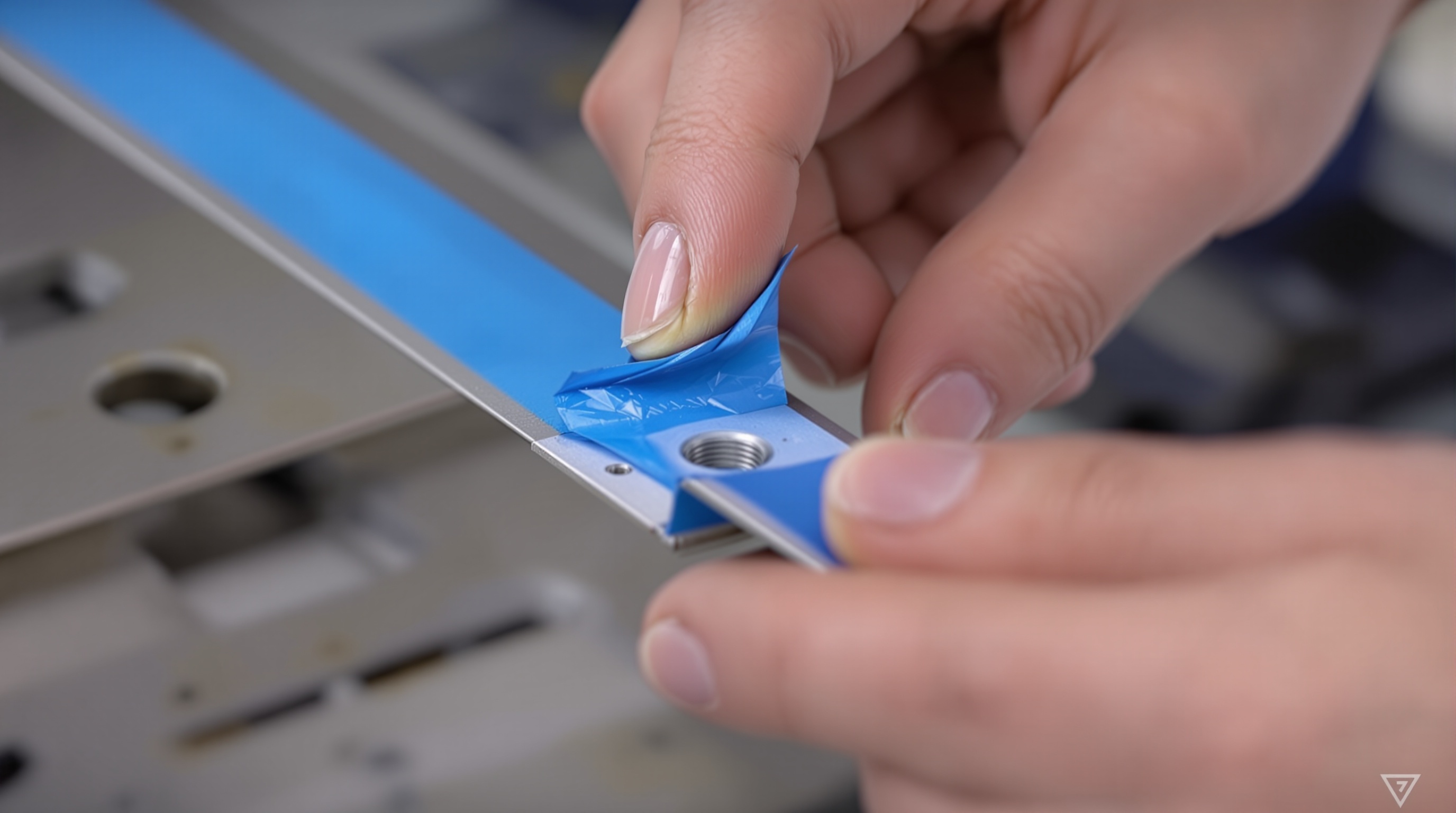
Cerakote applied via calibrated equipment at 0.5-2 mil specification. In-process thickness measurements on every part. Locked formula reproduces exact pigment ratio from initial color approval.

Cure & Color Verification
Temperature-monitored cure cycle. Spectrophotometer readings verify Delta E ≤1 against master. Final inspection confirms thickness, adhesion, color, and visual appearance. CoC with full L*a*b* data.

Proven Aesthetic Performance
Color claims verified through spectrophotometric measurement on every batch under AS9100 controls. L*a*b* data documented on every Certificate of Conformance.
90,000-Part Program Success
ColoradoKote delivered a commercial aircraft cabin interior program across 10 aircraft with Delta E ≤1 on every batch and zero color quality holds.
Delta E color consistency

Other services to consider
Explore what else we offer.

Weight Reduction for Oil and Gas Equipment
Thick coatings add mass to equipment transported to remote wellsites and offshore platforms. Cerakote at 0.5-2 mils saves 200-400g per part versus powder coating. ISO 9001 certified.

Weight Reduction for Medical Device Components
Surgical instruments must be light enough for hours of precise use. Cerakote at 0.5-2 mils saves 200-400g per part versus powder coating without compromising protection. ISO 9001 certified.

Weight Reduction for Maritime Equipment
Heavy coatings add mass to marine hardware that affects vessel performance and handling. Cerakote at 0.5-2 mils saves 200-400g per part versus powder coating. ISO 9001 certified.
Weight Reduction for Industrial OEM Components
Thick coatings add unnecessary mass to engineered equipment. Cerakote at 0.5-2 mils delivers 200-400g savings per part versus powder coating while preserving tolerances. ISO 9001 certified.
Certified and compliant for your industry


Get Aerospace Color Consistency
Send your color spec or physical sample. We respond within 24 hours with a matching plan and pricing.
Frequently Asked Questions
Find answers about our coating processes and technical capabilities
Surface preparation is the most critical variable in coating corrosion performance. Industry data consistently shows that 60-80% of coating failures trace back to inadequate surface preparation, not coating material failure. ColoradoKote achieves SSPC-SP 10 near-white blast with 2-4 mil anchor profile as standard, which is why our Cerakote applications consistently deliver salt spray resistance exceeding 3,000 hours. The preparation determines the result.
Yes. Cerakote delivers 3,000 hours salt spray resistance (ASTM B117) at 0.5-2 mils, while powder coating achieves only 500-1,500 hours at 4-6 mils. This means you get superior corrosion protection at a fraction of the coating weight. For applications where every gram matters, such as aerospace structures, UAVs, and performance vehicles, Cerakote provides the protection of a heavy coating system in a lightweight package.
Passivation per ASTM A967 is highly effective at protecting stainless steel agricultural components from the corrosive effects of fertilizers, herbicides, pesticides, and ammonia-based chemicals. The process maximizes the chromium oxide layer that resists chemical attack, with no dimensional change to precision fittings and spray nozzles. For components with extreme exposure, adding Cerakote extends protection to 3,000 hours of salt spray resistance (ASTM B117).
Yes. Tillage blades, planter components, seed meter housings, and sprayer fittings all receive SSPC-SP 10 blast preparation. Agricultural parts often arrive with heavy rust, caked soil, and previous coating failures that require aggressive preparation before recoating. We strip the failed finish, blast to clean metal, and apply Cerakote for dramatically longer service life than the original paint or powder coat. Contact us at 970.541.7331 for agricultural component quoting.
Chemical conversion coating provides the adhesion base, and Cerakote offers hundreds of colors and finishes for the visible topcoat, including metallics, flat, satin, and gloss options. Color consistency is held within Delta E 1.5 across production runs, ensuring your parts match batch to batch. This combination gives automotive builders both the corrosion protection and the precise aesthetic finish that high-end builds demand.