
Corrosion Resistance for Oil & Gas
Precision Cerakote ceramic coatings for aerospace, defense, and industrial components.

Corrosion Is the Primary Failure Mode in Oil & Gas
H2S, brine, and chemicals attack from all directions
The challenge
Harsh environments demand coatings that hold.
The solution
ColoradoKote ceramic coating stops corrosion cold.
Why Cerakote for Oil & Gas Corrosion
Chemical resistance meets production-volume consistency

4,000+ Hours Salt Spray Resistance
ASTM B117 verified. Molecular barrier blocks H2S, brine, and atmospheric corrosion on downhole tools, valves, and surface equipment.
Chemical Barrier Protection
Resists drilling fluids, completion chemicals, H2S, CO2, and produced water. Maintains barrier integrity under the chemical exposures that strip conventional coatings.
Thin-Film Precision
0.5-2 mil application maintains critical dimensions on valves, tool joints, and precision-machined components. No post-coating dimensional rework required.
Documented Quality
ISO 9001 certified process with full lot traceability. Material certifications, test data, and Certificate of Conformance for equipment quality records.
Oil & Gas Corrosion Specifications

How We Protect Oil & Gas Equipment
Chemical exposure assessment drives coating selection and application
Equipment Assessment & Chemical Profile
Operating environment, chemical exposure, and temperature conditions documented. Cerakote formulation selected for optimal resistance to specific corrosive media.
Surface Preparation & Application
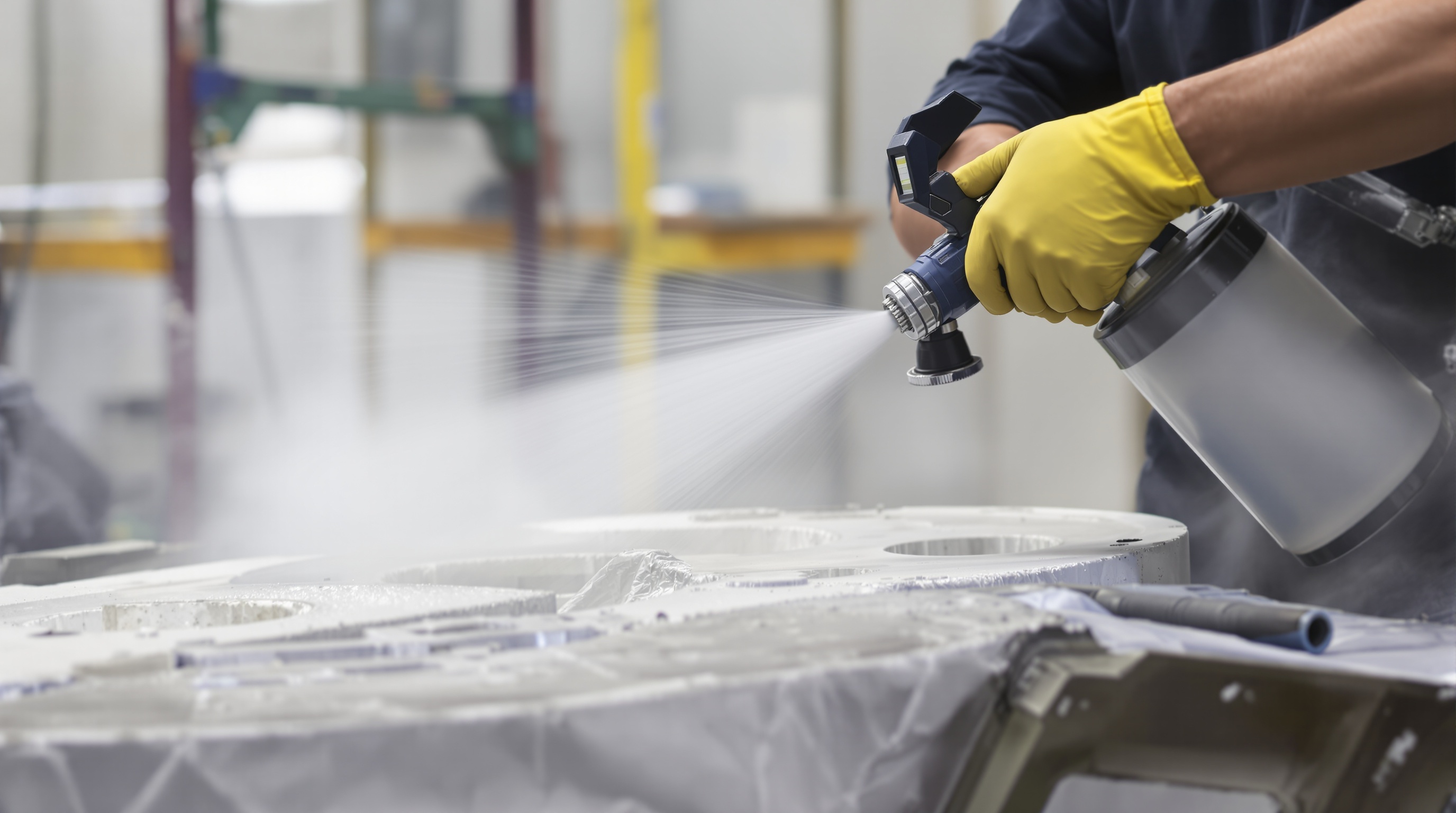
Media blasting to specified profile. Drilling fluids and preservatives removed. Cerakote applied at 0.5-2 mils with full coverage verification on complex equipment geometries.

Cure & Verification
Oven-cured per specification. Adhesion and thickness testing. Certificate of Conformance with material traceability and lot documentation for equipment records.

Verified Oil & Gas Corrosion Data
Corrosion and chemical resistance verified through ASTM B117 salt spray and chemical immersion testing. Results support engineering evaluation for equipment protection decisions.
Hours salt spray resistance

Other services to consider
Explore what else we offer.
Weight Reduction for Oil and Gas Equipment
Thick coatings add mass to equipment transported to remote wellsites and offshore platforms. Cerakote at 0.5-2 mils saves 200-400g per part versus powder coating. ISO 9001 certified.

Weight Reduction for Medical Device Components
Surgical instruments must be light enough for hours of precise use. Cerakote at 0.5-2 mils saves 200-400g per part versus powder coating without compromising protection. ISO 9001 certified.

Weight Reduction for Maritime Equipment
Heavy coatings add mass to marine hardware that affects vessel performance and handling. Cerakote at 0.5-2 mils saves 200-400g per part versus powder coating. ISO 9001 certified.
Weight Reduction for Industrial OEM Components
Thick coatings add unnecessary mass to engineered equipment. Cerakote at 0.5-2 mils delivers 200-400g savings per part versus powder coating while preserving tolerances. ISO 9001 certified.
Certified and compliant for your industry


Protect Your Equipment From Corrosion
Send your equipment specs and operating conditions. We respond within 24 hours with corrosion protection approach and pricing.
Frequently Asked Questions
Find answers about our coating processes and technical capabilities
Each layer addresses a different failure mode. Chemical conversion coating creates a chemically bonded base layer that promotes adhesion and provides initial corrosion inhibition at the metal surface. Passivation removes free iron and surface contaminants that would otherwise create galvanic corrosion cells beneath the coating. Cerakote then delivers the primary barrier with 3,000 hours salt spray resistance (ASTM B117). Running all three at ColoradoKote under one quality system eliminates the contamination and handling damage risk of shipping between vendors.
Cerakote's high-temperature series withstands sustained temperatures up to 2,000°F, making it ideal for exhaust manifolds, turbo housings, heat shields, and headers. The coating provides thermal management benefits while protecting against corrosion and maintaining appearance. Unlike ceramic wrap or spray-on heat coatings that degrade over time, Cerakote bonds at the molecular level to the substrate for long-term performance.
Corroded marine parts undergo ultrasonic cleaning to remove salt deposits, oxidation products, and contaminants from pits and crevices. Media blasting at 80-100 PSI removes remaining corrosion and profiles the surface for optimal Cerakote adhesion. The combined cleaning and blasting sequence, run under our ISO 9001 process controls, restores the substrate surface to a condition that accepts coating reliably, extending the component's service life significantly.
Yes. Engine blocks, intake manifolds, valve covers, and exhaust components all receive blast preparation tailored to the substrate material and operating temperature. Exhaust components destined for V-Series Cerakote (rated to 2,000 degrees F) are blasted to ensure adhesion under extreme thermal cycling. Aluminum engine components receive media selected to avoid iron contamination. All automotive blast work follows the same documented process controls as our aerospace operations.
Cerakote's ceramic-polymer bond resists hydrogen sulfide, brine, and the acidic conditions found in sour gas and produced water environments. Salt spray resistance of 3,000 hours (ASTM B117) reflects performance in aggressive chloride-rich conditions. The coating operates from -40 degrees F to 2,000 degrees F, covering the temperature range from Arctic wellheads to downhole tools. At 0.5-2 mils, it preserves thread engagement and sealing surfaces on tubular goods.