Corrosion Protection for Defense
Precision Cerakote ceramic coatings for aerospace, defense, and industrial components.

The Corrosion Problem in Defense
Where coating failure is a mission-readiness risk
The challenge
Harsh environments demand coatings that hold.
The solution
ColoradoKote ceramic coating stops corrosion cold.
Why Cerakote for Defense Corrosion Protection
Outperforms Parkerizing and chrome in the field

Salt spray resistance beyond Mil-Spec
4,000+ hours salt spray resistance (ASTM B117) versus 500 to 1,000 hours for Parkerizing and 336-1,000 hours for anodizing. That is three to six times the protection of traditional defense coatings. Components maintain barrier integrity through desert, maritime, and arctic field environments without secondary treatments.
Dimensional precision for weapon systems
0.5-2 mil controlled thickness preserves the tight tolerances required for weapon systems, optical housings, and precision tactical assemblies. Parts coat to specification without post-coating machining. Powder coating at 3-5 mils causes dimensional interference that compromises function on close-tolerance defense components.
ITAR-compliant traceability
ColoradoKote is ITAR registered with the Directorate of Defense Trade Controls. Every corrosion protection job is documented per AS9100 requirements under controlled-access protocols. Certificate of Conformance includes material batch numbers, Federal Standard 595 color verification, and full chain-of-custody documentation.
Multi-substrate coverage for mixed-material systems
Cerakote bonds to steel, aluminum, titanium, stainless steel, and polymer components. One coating system protects an entire weapon system regardless of substrate material. Chrome plating faces regulatory pressure from hexavalent chromium restrictions. Cerakote provides comparable corrosion protection without hazardous waste.
Corrosion Protection Specs for Defense

How We Deliver Corrosion Protection for Defense
ITAR-controlled process with documented chain of custody at every step
Controlled Intake and Surface Preparation
Defense articles enter our controlled-access facility under chain-of-custody documentation. Parts are logged, photographed, and assigned lot numbers. Substrates undergo ultrasonic cleaning, degreasing, and tailored media blasting. MIL-DTL-5541 chemical conversion pre-treatment is applied to aluminum components for enhanced corrosion protection.
Precision Corrosion Barrier Application
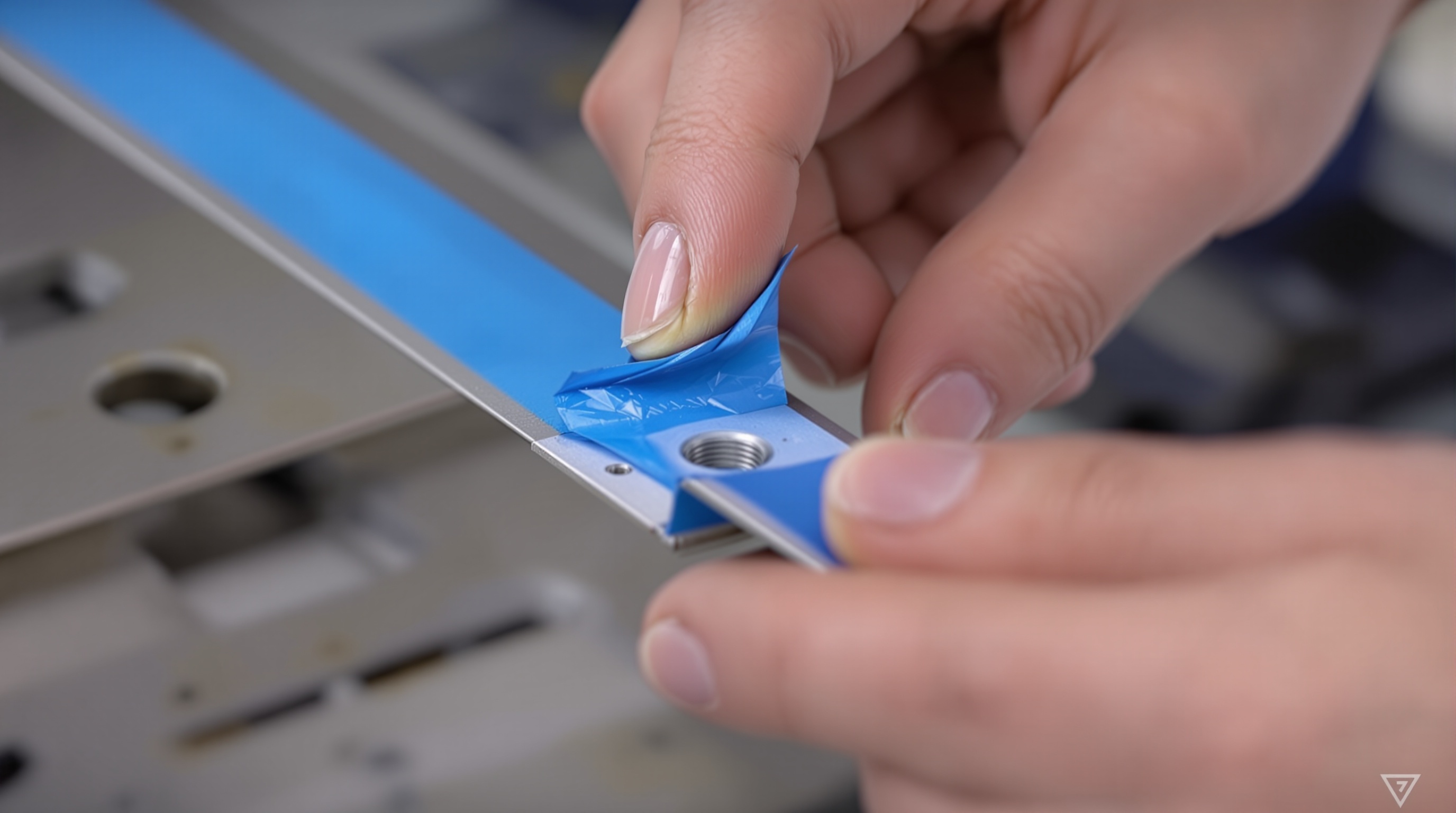
Cerakote is applied via calibrated HVLP equipment at 0.5-2 mil thickness, building a continuous corrosion barrier. Federal Standard 595 color matching is verified by spectrophotometer for tactical colors including ODG, FDE, and Coyote Brown. In-process DFT measurements confirm thickness compliance on every part.

Inspection and Certificate of Conformance
Multi-point final inspection verifies coating thickness, adhesion per ASTM D3359, pencil hardness, and color consistency (Delta E ≤1). Certificate of Conformance documents part identification, coating specification, material lot numbers, cure parameters, and all inspection results. Full AS9100 traceability ships with every defense order.

Proven Corrosion Protection for Defense
Corrosion protection performance is verified through standardized ASTM testing under AS9100 quality controls. Every production batch is documented with full lot traceability, and results are included on your Certificate of Conformance alongside chain-of-custody records.
4,000+ hours salt spray resistance
Validated against ASTM B117, the same standard used to qualify corrosion protection for military applications. This performance exceeds Parkerizing by three to six times, meaning components maintain protective integrity through extended field deployments without requiring retreatment or oil impregnation.
Hours salt spray resistance (ASTM B117)

Other services to consider
Explore what else we offer.

Weight Reduction for Oil and Gas Equipment
Thick coatings add mass to equipment transported to remote wellsites and offshore platforms. Cerakote at 0.5-2 mils saves 200-400g per part versus powder coating. ISO 9001 certified.

Weight Reduction for Medical Device Components
Surgical instruments must be light enough for hours of precise use. Cerakote at 0.5-2 mils saves 200-400g per part versus powder coating without compromising protection. ISO 9001 certified.

Weight Reduction for Maritime Equipment
Heavy coatings add mass to marine hardware that affects vessel performance and handling. Cerakote at 0.5-2 mils saves 200-400g per part versus powder coating. ISO 9001 certified.
Weight Reduction for Industrial OEM Components
Thick coatings add unnecessary mass to engineered equipment. Cerakote at 0.5-2 mils delivers 200-400g savings per part versus powder coating while preserving tolerances. ISO 9001 certified.
Certified and compliant for your industry
Protect Your Defense Equipment
Submit an ITAR-compliant corrosion protection RFP. We respond within 24 hours with pricing.
Frequently Asked Questions
Find answers about our coating processes and technical capabilities
Yes. Valve assemblies in oil and gas service frequently require color-coded markings for flow direction, service type, and maintenance status. We apply multi-color Cerakote with precision masking to maintain sharp boundaries between color zones. Each color is spectrophotometer-verified to Delta E 1.5 and cured separately. The 0.5-2 mil film build does not interfere with sealing surfaces or threaded connections, and the finish withstands the H2S, brine, and temperature cycling of field environments.
Clean substrate surfaces are the foundation for all downstream AM post-processing. Residual powder, oils from handling, and manufacturing residue create adhesion failures and surface defects in the finished coating. Ultrasonic cleaning integrated into the AM post-processing sequence, before blasting and coating, ensures every part starts from a verified-clean condition. This contributes to the consistent quality results that allow us to maintain our 20,000+ parts track record with zero quality issues.
Yes. Surface contaminants affect how coating flows, levels, and cures. Oils cause fish-eye defects, particulates create bumps, and residual films cause adhesion-related coating flaws that mar appearance. Ultrasonic cleaning eliminates these contaminant sources, allowing Cerakote to produce the smooth, uniform, defect-free finish that aesthetic applications require. For color-critical work verified to Delta E 1.5, starting from an ultrasonically cleaned surface is essential for consistent appearance.
Chemical conversion coating per MIL-DTL-5541 provides a stable oxide layer on aluminum that withstands many sterilization protocols. When paired with a Cerakote topcoat, the combined stack delivers chemical resistance and 3,000 hours of salt spray performance (ASTM B117) while maintaining color consistency within Delta E 1.5. This makes it an excellent system for medical equipment housings, trays, and fixtures exposed to harsh cleaning agents.
We provide full lot traceability and processing documentation to MIL-DTL-5541 specifications for all oil and gas chemical conversion coating work. Our facility has processed over 20,000 parts with zero quality issues, and our documentation packages meet the traceability requirements that oil and gas operators and OEMs demand for downhole and surface equipment.