Weight Reduction for Agriculture
Precision Cerakote ceramic coatings for aerospace, defense, and industrial components.

The Weight Problem in Agriculture Equipment
Where coating mass compounds across the fleet
The challenge
Harsh environments demand coatings that hold.
The solution
ColoradoKote ceramic coating stops corrosion cold.
Why Cerakote for Agriculture Weight Savings
Thin-film protection built for field conditions

200-400g savings per component
Cerakote at 0.5-2 mils replaces powder coating at 3-5 mils, reducing coating weight on every part. For equipment with dozens of coated components, the cumulative savings reduce total equipment mass and improve fuel efficiency during field operations.
Tolerance preservation on hydraulic parts
A 1 mil application adds only 0.001 inches per side, maintaining thread class tolerances and hydraulic fitting dimensions. Parts coat to specification without post-coating thread chasing or dimensional rework.
ISO 9001 documented quality
Certificate of Conformance includes DFT measurements, material batch numbers, and inspection results for every order. Consistent documentation supports OEM quality requirements and warranty verification across production lots.
Combined corrosion and wear protection
One thin-film coating delivers both 4,000+ hours salt spray resistance and 8,000+ wear cycles per mil. Agriculture components face the combined assault of chemical exposure and soil abrasion, and Cerakote addresses both without the weight penalty of layered coatings.
Weight Reduction Specs for Agriculture

How We Deliver Weight Reduction for Ag Parts
Controlled thin-film application for field-ready equipment
Surface Preparation
Components are cleaned, degreased, and media-blasted to create the surface profile required for coating adhesion. Masking protects threads, hydraulic sealing areas, and bearing surfaces. Proper preparation is the foundation of coating performance on soil-contact and chemical-exposed agriculture parts.
Thin-Film Coating Application
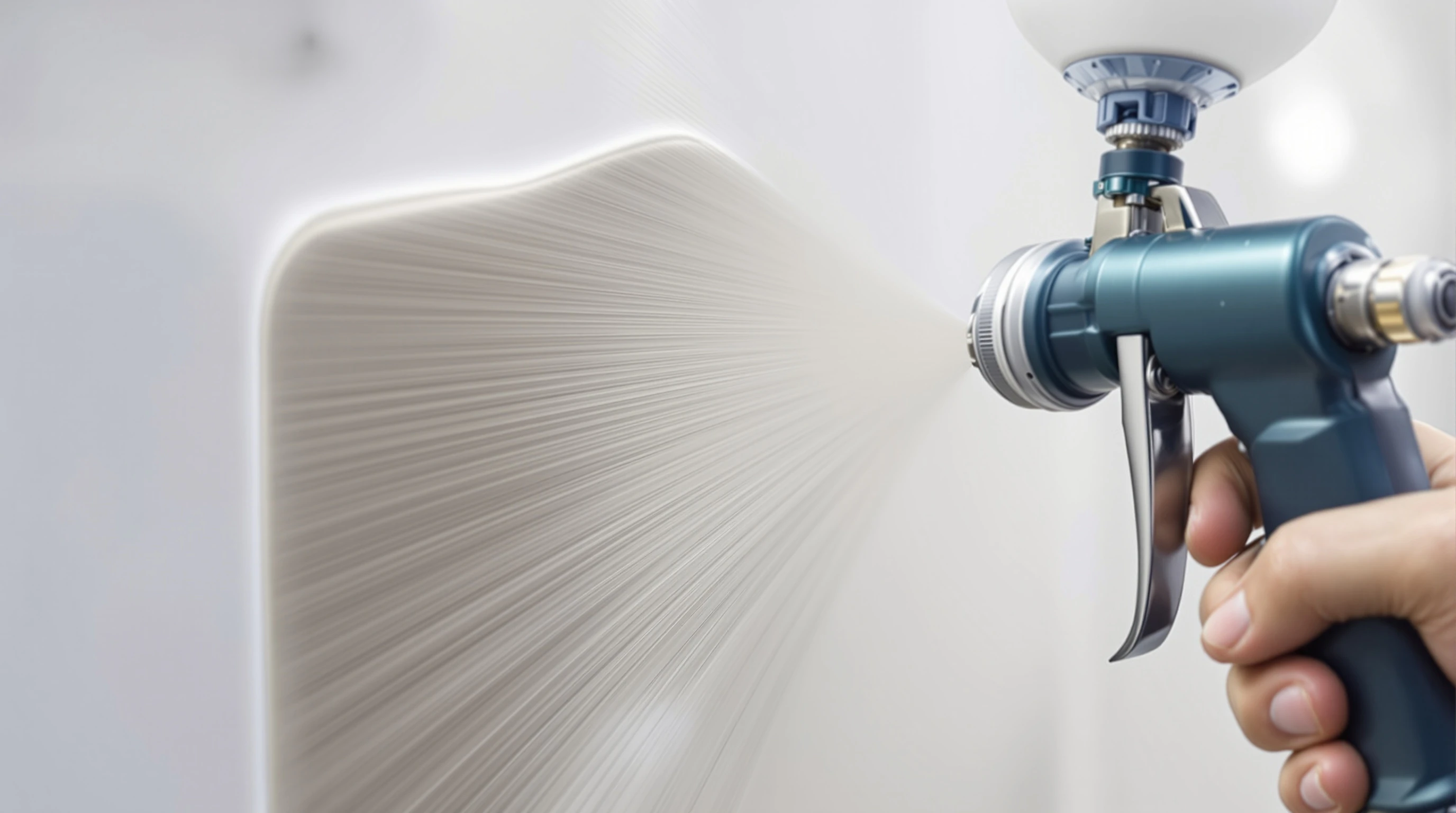
Cerakote is applied via calibrated HVLP equipment at 0.5-2 mil thickness. In-process DFT measurements confirm uniform coverage without excess buildup on precision hydraulic fittings and threaded connections. One formulation bonds to both steel and aluminum substrates.

Inspection and Documentation
Final inspection verifies coating thickness, adhesion, and visual appearance. Certificate of Conformance documents all measurements and material batch records. Consistent quality controls ensure every lot meets the same performance standards.

Verified Weight Savings for Ag Equipment
Weight savings are verified through DFT measurement and gravimetric analysis. ISO 9001 documentation captures coating thickness and weight data for your quality records.
200-400g savings per part vs powder coating
At 0.5-2 mils versus 3-5 mils, each component carries less coating mass while retaining the corrosion and wear resistance that agriculture conditions demand. The thin film also provides chip resistance 2-3x superior to powder coating, reducing field touch-up requirements.
Weight savings vs powder coating

Other services to consider
Explore what else we offer.

Weight Reduction for Oil and Gas Equipment
Thick coatings add mass to equipment transported to remote wellsites and offshore platforms. Cerakote at 0.5-2 mils saves 200-400g per part versus powder coating. ISO 9001 certified.

Weight Reduction for Medical Device Components
Surgical instruments must be light enough for hours of precise use. Cerakote at 0.5-2 mils saves 200-400g per part versus powder coating without compromising protection. ISO 9001 certified.

Weight Reduction for Maritime Equipment
Heavy coatings add mass to marine hardware that affects vessel performance and handling. Cerakote at 0.5-2 mils saves 200-400g per part versus powder coating. ISO 9001 certified.
Weight Reduction for Industrial OEM Components
Thick coatings add unnecessary mass to engineered equipment. Cerakote at 0.5-2 mils delivers 200-400g savings per part versus powder coating while preserving tolerances. ISO 9001 certified.
Certified and compliant for your industry


Lighten Your Ag Equipment Coating
Submit an RFP for agriculture equipment coating. We respond within 24 hours with pricing.
Frequently Asked Questions
Find answers about our coating processes and technical capabilities
Defense vehicle components face abrasion from sand, dust, debris impact, and mechanical contact during field operations. Cerakote's 9H hardness and 4,000 cycles per mil abrasion resistance outperform conventional military paint systems on high-wear surfaces. Impact resistance of 160/160 inch-pounds protects against debris strikes and rough handling during field maintenance. The coating's temperature range from -40°F to 2,000°F covers every operational environment.
Medical instruments and device housings have tight tolerances for proper function, sterile seal integrity, and assembly fit. Cerakote's 0.5 to 2 mil application preserves these dimensions where thicker coatings would interfere. This is particularly critical for implantable device housings, endoscopic instrument shafts, and robotic surgery components where micron-level dimensional accuracy determines performance and patient safety.
For maximum coating adhesion and longevity, our recommended full preparation stack is: ultrasonic cleaning to remove all chemical and organic contaminants, followed by sandblasting to SSPC-SP 10 with 2-4 mil anchor profile, followed by chemical conversion or passivation where applicable for the substrate material, then Cerakote application. Each step addresses a specific adhesion requirement. Skipping any step reduces the final coating performance. This full stack is what delivers salt spray resistance exceeding 3,000 hours consistently.
Cerakote's ceramic-polymer bond resists hydrogen sulfide, brine, and the acidic conditions found in sour gas and produced water environments. Salt spray resistance of 3,000 hours (ASTM B117) reflects performance in aggressive chloride-rich conditions. The coating operates from -40 degrees F to 2,000 degrees F, covering the temperature range from Arctic wellheads to downhole tools. At 0.5-2 mils, it preserves thread engagement and sealing surfaces on tubular goods.
Chemical conversion coating and anodizing serve different purposes on agricultural aluminum. Conversion coating is thinner (sub-micron vs. 0.5-3 mils for anodizing), faster to process, and provides excellent paint adhesion as a primer layer. For agricultural parts that need both a corrosion base coat and a durable topcoat, the chem conversion plus Cerakote stack delivers 3,000 hours of salt spray protection while keeping buildup to 0.5-2 mils total.