Weight Reduction for Defense
Precision Cerakote ceramic coatings for aerospace, defense, and industrial components.

The Weight Problem in Defense Equipment
Where coating mass affects mission readiness
The challenge
Harsh environments demand coatings that hold.
The solution
ColoradoKote ceramic coating stops corrosion cold.
Why Cerakote for Defense Weight Reduction
Thin-film protection that meets Mil-Spec demands

200-400g savings per component
Cerakote at 0.5-2 mils replaces powder coating at 3-5 mils, delivering measurable weight savings across every coated component. For man-portable systems and vehicle-mounted equipment, the cumulative reduction across hundreds of parts per program improves mobility and extends operational range.
Dimensional precision on weapon systems
A 1 mil application adds only 0.001 inches per side, preserving the tight tolerances critical for weapon system interfaces, rail-mounted accessories, and precision mechanical assemblies. Parts coat to specification without post-coating machining or thread chasing.
ITAR-compliant documentation
Every coating parameter is documented under ITAR-controlled protocols with AS9100 quality management. Certificate of Conformance includes material batch numbers, DFT measurements, cure records, and weight data. Chain-of-custody documentation tracks defense articles from intake through shipment.
Multi-substrate compatibility
Cerakote bonds to aluminum, steel, titanium, and polymer substrates used in defense manufacturing. One thin-film coating system covers mixed-material assemblies, simplifying the vendor qualification process and reducing the logistics burden of multiple specialized coatings.
Weight Reduction Specs for Defense Applications

How We Deliver Weight Reduction for Defense
ITAR-controlled process with documented chain of custody at every step
Controlled Intake and Assessment
Defense articles enter chain-of-custody documentation upon arrival at our controlled-access facility. Parts are weighed, measured, and logged against the purchase order. Substrate composition and coating requirements are confirmed before processing begins. ITAR-controlled technical data is handled under secure protocols.
Thin-Film Coating Application
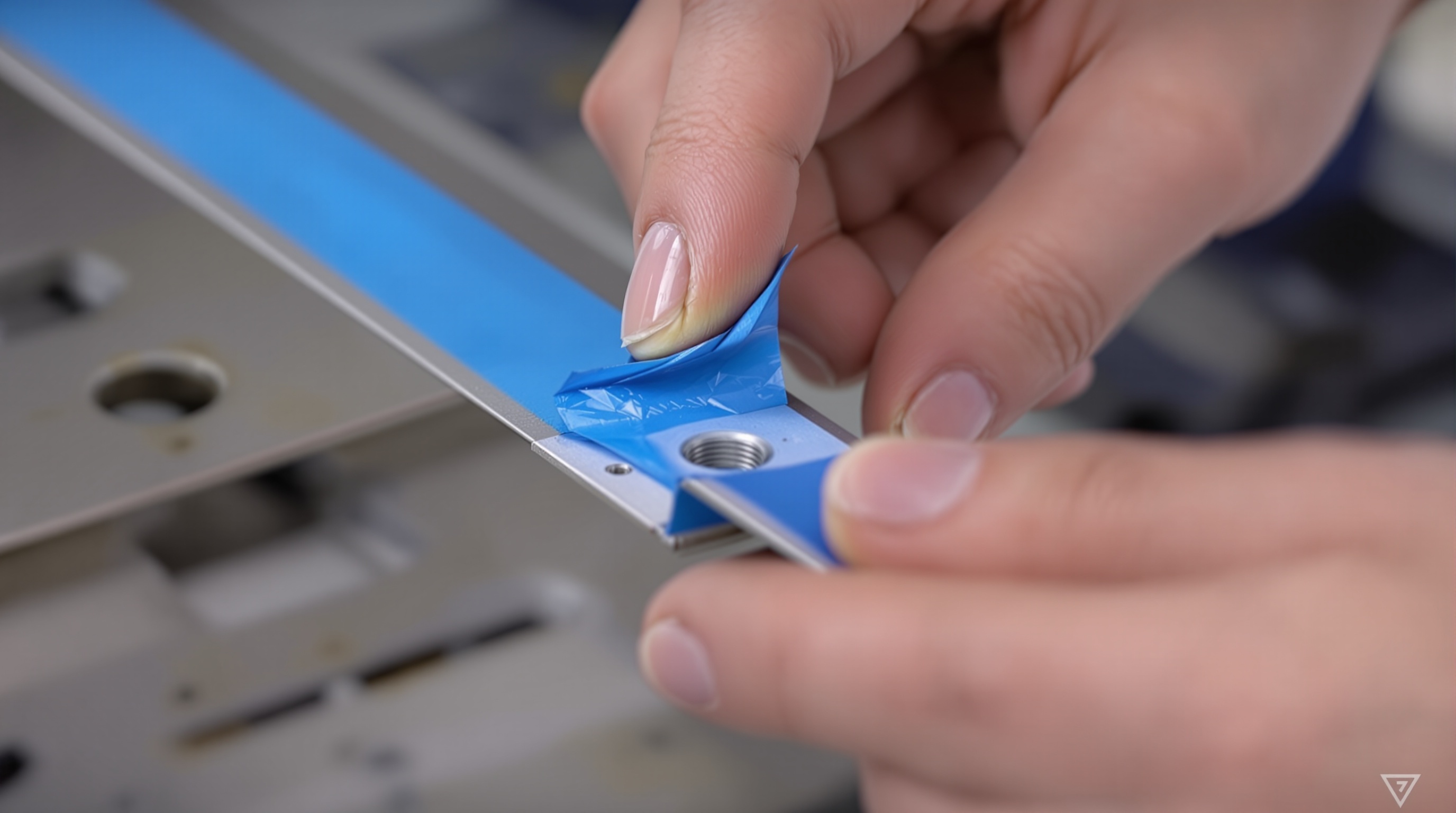
Cerakote is applied via calibrated HVLP equipment targeting 0.5-2 mils. In-process DFT measurements confirm uniform thickness across each component. Federal Standard 595 color matching is verified by spectrophotometer for tactical colors. Masking protects weapon system interfaces, rail surfaces, and threaded connections.

Weight Verification and Documentation
Pre- and post-coating weight measurements document actual coating mass added to each part. Final inspection verifies thickness, adhesion per ASTM D3359, and color consistency. Certificate of Conformance includes weight data, DFT readings, and full AS9100 traceability for defense program records.

Verified Weight Savings for Defense Programs
Weight reduction performance is documented through gravimetric analysis and DFT measurement on every production lot. AS9100 records capture pre- and post-coating weight alongside dimensional verification for defense program traceability.
200-400g savings per part vs powder coating
At 0.5-2 mils versus 3-5 mils, each tactical component carries significantly less coating mass while retaining chip resistance 2-3x superior to powder coating. For programs with hundreds of coated parts, the cumulative savings improve mobility and reduce logistical weight burden across the equipment lifecycle.
Weight savings vs powder coating

Other services to consider
Explore what else we offer.

Weight Reduction for Oil and Gas Equipment
Thick coatings add mass to equipment transported to remote wellsites and offshore platforms. Cerakote at 0.5-2 mils saves 200-400g per part versus powder coating. ISO 9001 certified.

Weight Reduction for Medical Device Components
Surgical instruments must be light enough for hours of precise use. Cerakote at 0.5-2 mils saves 200-400g per part versus powder coating without compromising protection. ISO 9001 certified.

Weight Reduction for Maritime Equipment
Heavy coatings add mass to marine hardware that affects vessel performance and handling. Cerakote at 0.5-2 mils saves 200-400g per part versus powder coating. ISO 9001 certified.
Weight Reduction for Industrial OEM Components
Thick coatings add unnecessary mass to engineered equipment. Cerakote at 0.5-2 mils delivers 200-400g savings per part versus powder coating while preserving tolerances. ISO 9001 certified.
Certified and compliant for your industry
Lighten Your Defense Components
Submit an ITAR-compliant coating RFP. We respond within 24 hours with specifications.
Frequently Asked Questions
Find answers about our coating processes and technical capabilities
Additive manufacturing parts retain loose powder, partially sintered particles, and support material residue that must be removed before coating. Ultrasonic cavitation reaches contaminants trapped in lattice structures, internal channels, and the surface porosity inherent in AM builds. This cleaning step is especially critical for AM parts because residual powder and contamination prevent coating adhesion and create defects in the finished surface. Parts proceed from ultrasonic cleaning to controlled blasting at 40-60 PSI and then to Cerakote application.
Yes. Abrasion resistance of 4,000 cycles per mil (ASTM D4060) and 9H pencil hardness (ASTM D3363) provide substantial protection against the grinding abrasion of soil, sand, and crop material on coulter blades, seed openers, ground-engaging tools, and conveyor surfaces. For high-wear components, the full stack of chemical conversion coating plus Cerakote maximizes adhesion so the coating stays bonded under sustained abrasive contact.
Yes. Tillage components, planter wear parts, and ground-engaging equipment face constant soil abrasion that wears through conventional paint and powder coat in hours of field use. Cerakote's 4,000 cycles per mil abrasion resistance maintains both color and protection under soil contact conditions. While ground-engaging cutting edges will eventually wear through any coating, non-contact surfaces like housings, guards, and identification panels retain their color matching throughout the equipment lifecycle.
Additive manufacturing enables topology optimization and lattice structures specifically to minimize weight. Applying 4-6 mils of powder coating negates some of that design intent. Cerakote at 0.5-2 mils adds negligible mass while providing 3,000 hours salt spray resistance (ASTM B117), 4,000 abrasion cycles per mil (ASTM D4060), and a production-grade surface finish. The coating protects the part without undermining the engineering rationale for printing it.
Yes. Machining fluids, cutting oils, and coolant residue are the most common contaminants on incoming aerospace parts. Ultrasonic cavitation penetrates into every surface feature including cross-drilled holes, internal channels, and thread roots to dislodge and dissolve these contaminants. Alkaline cleaning solutions emulsify and suspend petroleum-based fluids for removal. Post-cleaning rinse in deionized water ensures no cleaning solution residue remains. The entire cleaning process is documented under AS9100.